
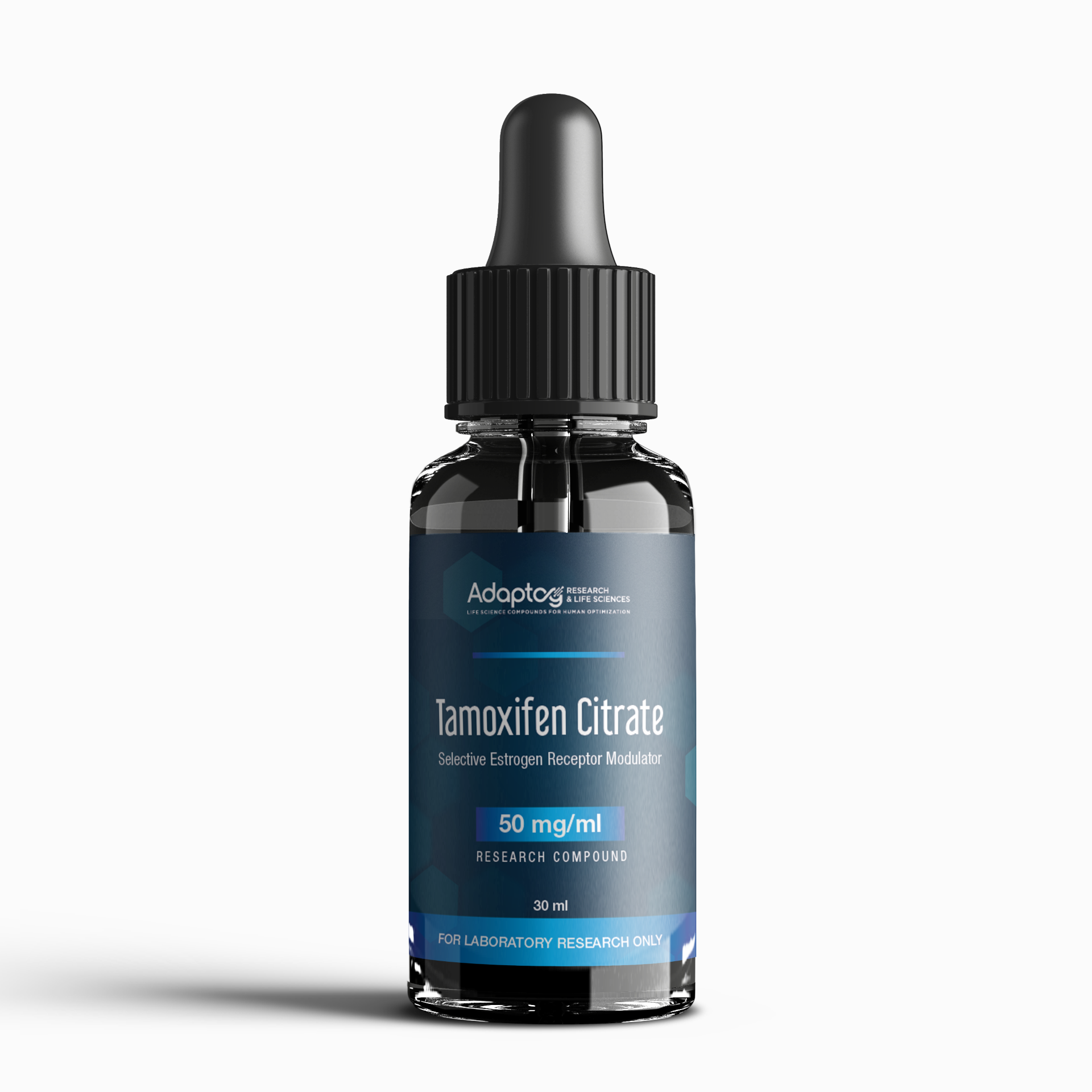


Tamoxifen is a selective oestrogen receptor modulator (SERM) primarily used for the treatment of breast cancer and to induce ovulation in anovulatory women. It has also been investigated for the treatment of several other hormone-related problems due to its ability to influence oestrogen levels.
Mechanism of Action
Tamoxifen is able to either agonise or antagonise oestrogen receptors depending on tissue type. It works by the following mechanisms:
- Binding to oestrogen receptors in breast tissue: Tamoxifen binds competitively to oestrogen receptors, displacing oestrogen and changing the conformation of the oestrogen receptor. This conformation change reduces coactivator binding and promotes the binding of corepressors including N-CoR/SMRT and HDAC-associated complexes. This suppresses the transcription of genes responsible for oestrogen-responsive proliferation.1
- Binding to oestrogen receptors in the hypothalamus and pituitary: Tamoxifen blocks receptors in the brain, which leads to an increase in LH, FSH, testosterone and oestradiol.2
- Modulating membrane fluidity: It enhances membrane permeability, possibly altering membrane protein functions.3
- Agonising oestrogen receptors in the liver: This leads to an increase in expression of LDL receptors and changes in LDL and cholesterol levels.4,5
Therapeutic Potential
These mechanisms mean that tamoxifen is useful in the treatment of several diseases which are driven by hormones or their imbalance:
- Breast cancer: Tamoxifen is prescribed to those with breast cancer as it prevents the growth of breast tissue that would be stimulated by oestrogen. A meta-study reported that tamoxifen treatment reduced the incidence of both invasive and non-invasive breast cancer in women by 49% and 50%, respectively.6 Its ability to alter membrane permeability may also improve the efficacy of multidrug-resistant cancer treatments.
- Anovulatory infertility: Due to the oestrogen-blocking effect of tamoxifen on the brain, LH and FSH levels increase, which promote the maturation of egg follicles and stimulate ovulation. When combined with clomiphene citrate, it effectively increases the incidence of ovulation to 78.6% in anovulatory women.7
- Gynaecomastia: Because tamoxifen prevents oestrogen from binding to breast tissue, it can hamper the development of this type of tissue in men. In one clinical study, 10 men with gynaecomastia took 10 mg of tamoxifen for one month. 7 of the patients experienced a reduction in the size of their gynaecomastia and pain from the condition was relieved.8
- Male infertility: The oestrogen-blocking effect that tamoxifen has on the brain benefits male as well as female fertility. The increase in LH, FSH, testosterone and oestradiol that results from tamoxifen treatment improves sperm quality and quantity. A clinical study which administered 10 mg tamoxifen to men for three months found a significant increase in sperm count, concentration and health.9
- Cardiovascular problems: Because tamoxifen agonises oestrogen receptors in the liver, altering LDL receptor expression, it can favourably influence blood lipid profiles. This may make it a useful tool in the treatment of coronary artery disease.10,11
Safety
Tamoxifen is generally considered safe but comes with side effects. In women, these include:
- Hot flashes
- Night sweats
- Cold sweats
- Fatigue
- Vaginal dryness
- Slight increase in risk of uterine cancer, cataracts and blood clots12–14
In men receiving tamoxifen for the treatment of prostate or breast cancer, some of the most common side effects include:
- Nausea and vomiting
- Altered gait
- Fatigue
- Anorexia
- Anxiety
- Decreased libido
- Sleep disorders
- Hot flashes
- Erectile dysfunction15
How It Compares to Aromatase Inhibitors
Tamoxifen works by blocking or agonising oestrogen receptors depending on tissue type, while aromatase inhibitors (AIs) block the enzyme aromatase, which converts androgens into oestrogen.
AIs are generally considered more effective for the prevention of breast cancer recurrence.16 They also carry a lower risk of uterine cancer and blood clots when compared to tamoxifen.
Tamoxifen improves blood lipid profiles, while AIs can negatively affect total cholesterol, LDL and triglycerides.17
For the treatment of gynaecomastia, tamoxifen is considered a more reliable option, partly due to the greater body of research supporting its successful use.18
AIs may also be useful for the treatment of male infertility due to their ability to increase FSH and testosterone levels, as well as improve sperm quality.19
Data Sheet
| Application | Research on infertility, gynaecomastia and cardiovascular disease |
| Pack Sizes | 50 mg/ml solution |
| CAS Number | 54965-24-1 |
| Molecular Weight (g/mol) | 371.51 |
| Chemical Formula | C26H29NO · xC6H8O7 |
| Synonyms | Tamoxifen Citrate, Estrogen Receptor Signaling Regulator I |
| Storage | Keep refrigerated at 2–8°C until use. For long-term storage, keep at -20°C. Avoid repeat freeze-thaw cycles. |
| Organoleptic Profile | Clear, colourless to pale yellow liquid |
| Physical Form | Liquid |
Conclusion
Tamoxifen is a SERM and, because of its effect on oestrogen receptors, is used to treat diseases that are exacerbated by oestrogen, such as breast cancer and anovulatory infertility. It has been used off-label for the treatment of gynaecomastia and male infertility with some success. In addition to this, it has been found to improve blood lipid profiles, potentially reducing the risk of cardiovascular events.
References
- Matariek G, Teibo JO, Elsamman K, et al. Tamoxifen: The Past, Present, and Future of a Previous Orphan Drug. Eur J Med Health Sci. 2022;4(3):1-10. doi:10.24018/ejmed.2022.4.3.1124
- Vermeulen A, Comhaire F. Hormonal Effects of an Antiestrogen, Tamoxifen, in Normal and Oligospermic Men*. Fertil Steril. 1978;29(3):320-327. doi:10.1016/S0015-0282(16)43160-2
- Khadka NK, Cheng X, Ho CS, Katsaras J, Pan J. Interactions of the Anticancer Drug Tamoxifen with Lipid Membranes. Biophys J. 2015;108(10):2492-2501. doi:10.1016/j.bpj.2015.04.010
- Eriksson M, Berglund L, Rudling M, Henriksson P, Angelin B. Effects of estrogen on low density lipoprotein metabolism in males. Short-term and long-term studies during hormonal treatment of prostatic carcinoma. J Clin Invest. 1989;84(3):802-810. doi:10.1172/JCI114239
- Love RR, Newcomb PA, Wiebe DA, et al. Effects of tamoxifen therapy on lipid and lipoprotein levels in postmenopausal patients with node-negative breast cancer. J Natl Cancer Inst. 1990;82(16):1327-1332. doi:10.1093/jnci/82.16.1327
- Fisher B, Costantino JP, Wickerham DL, et al. Tamoxifen for prevention of breast cancer: report of the National Surgical Adjuvant Breast and Bowel Project P-1 Study. J Natl Cancer Inst. 1998;90(18):1371-1388. doi:10.1093/jnci/90.18.1371
- Suginami H, Kitagawa H, Nakahashi N, Yano K, Matsubara K. A clomiphene citrate and tamoxifen citrate combination therapy: a novel therapy for ovulation induction. Fertil Steril. 1993;59(5):976-979. doi:10.1016/S0015-0282(16)55913-5
- Parker LN, Gray DR, Lai MK, Levin ER. Treatment of gynecomastia with tamoxifen: a double-blind crossover study. Metabolism. 1986;35(8):705-708. doi:10.1016/0026-0495(86)90237-4
- Guo L, Jing J, Feng YM, Yao B. Tamoxifen is a potent antioxidant modulator for sperm quality in patients with idiopathic oligoasthenospermia. Int Urol Nephrol. 2015;47(9):1463-1469. doi:10.1007/s11255-015-1065-2
- Clarke SC, Schofield PM, Grace AA, Metcalfe JC, Kirschenlohr HL. Tamoxifen effects on endothelial function and cardiovascular risk factors in men with advanced atherosclerosis. Circulation. 2001;103(11):1497-1502. doi:10.1161/01.cir.103.11.1497
- Love RR, Wiebe DA, Feyzi JM, Newcomb PA, Chappell RJ. Effects of tamoxifen on cardiovascular risk factors in postmenopausal women after 5 years of treatment. J Natl Cancer Inst. 1994;86(20):1534-1539. doi:10.1093/jnci/86.20.1534
- Hammarström M, Gabrielson M, Crippa A, et al. Side effects of low-dose tamoxifen: results from a six-armed randomised controlled trial in healthy women. Br J Cancer. 2023;129(1):61-71. doi:10.1038/s41416-023-02293-z
- Committee Opinion No. 601: Tamoxifen and uterine cancer. Obstet Gynecol. 2014;123(6):1394-1397. doi:10.1097/01.AOG.0000450757.18294.cf
- Meier CR, Jick H. Tamoxifen and risk of idiopathic venous thromboembolism. Br J Clin Pharmacol. 1998;45(6):608-612. doi:10.1046/j.1365-2125.1998.00733.x
- Wibowo E, Pollock PA, Hollis N, Wassersug RJ. Tamoxifen in men: a review of adverse events. Andrology. 2016;4(5):776-788. doi:10.1111/andr.12197
- Aromatase inhibitors versus tamoxifen in premenopausal women with oestrogen receptor-positive early-stage breast cancer treated with ovarian suppression: a patient-level meta-analysis of 7030 women from four randomised trials. Lancet Oncol. 2022;23(3):382-392. doi:10.1016/S1470-2045(21)00758-0
- Monnier A. Effects of adjuvant aromatase inhibitor therapy on lipid profiles. Expert Rev Anticancer Ther. 2006;6(11):1653-1662. doi:10.1586/14737140.6.11.1653
- Braunstein GD. Aromatase and gynecomastia. Endocr Relat Cancer. 1999;6(2):315-324. doi:10.1677/erc.0.0060315
- Yang C, Li P, Li Z. Clinical application of aromatase inhibitors to treat male infertility. Hum Reprod Update. 2021;28(1):30-50. doi:10.1093/humupd/dmab036
Reviews
There are no reviews yet.