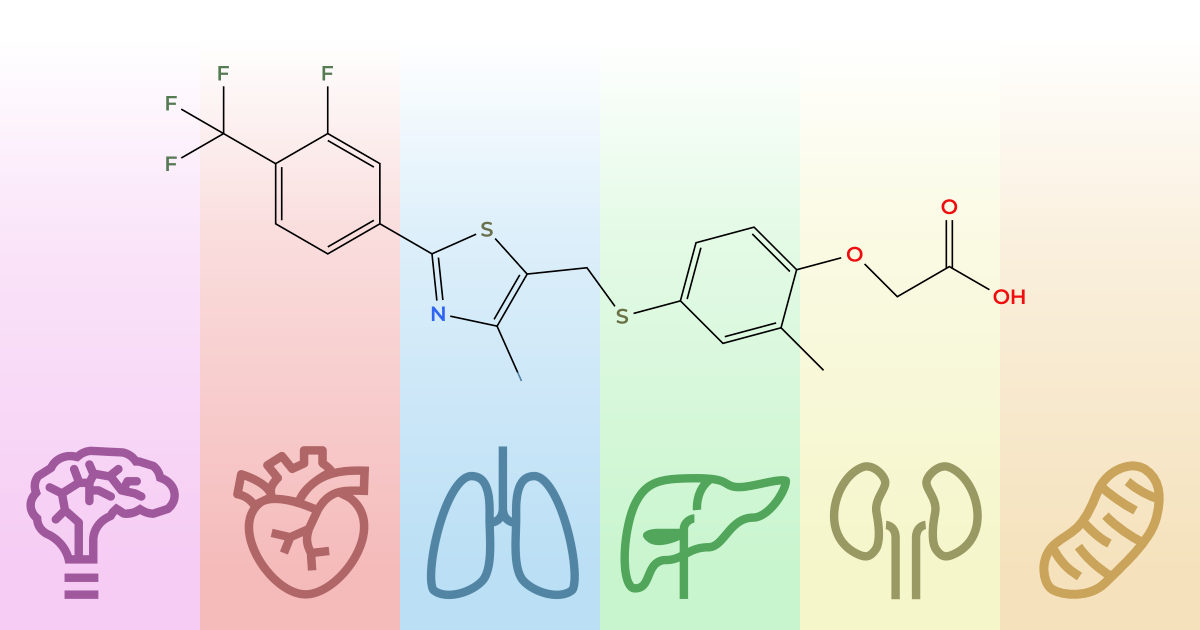
Peroxisome proliferator-activated receptor β/δ (PPAR-β/δ) agonists are a class of compounds that specifically target PPAR-β/δ receptors, activating them. These receptors regulate the expression of multiple genes involved in metabolism, inflammation, and cellular function, so artificially manipulating their activation may be useful for therapeutic purposes. GW0742 is one such PPAR-β/δ agonist that has high specificity for this receptor and has been the subject of extensive preclinical research.
What Does Activation of PPAR-β/δ Receptors Do?
PPAR-β/δ receptors are normally activated by endogenous lipid ligands, including oxidized and nitrated fatty acid derivatives, cyclopentenone prostaglandins, and polyunsaturated fatty acids. These molecules are produced in response to inflammation or a change in metabolism, so PPAR-β/δ receptor activation typically occurs when these molecules are present.
Once activated, these receptors form a heterodimer with retinoid X receptors (RXR), which modulate gene expression responsible for regulating lipid metabolism, inflammation, and oxidative stress. They work to:
- Limit inflammatory activity by inactivating NF-κB and promoting the expression of antioxidant enzymes, reducing reactive oxygen species (ROS), and preventing an exaggerated inflammatory response2. This is important, as, although inflammation is a natural and necessary response to pathogens or injury, excessive or prolonged inflammation can cause damage to tissues.
- Modulate energy metabolism by responding to dietary lipids and the metabolic products of lipids. Lipid and glucose metabolism are enhanced by improving mitochondrial function, as well as fatty acid oxidation and desaturation pathways. This reduces stress and inflammation of the endoplasmic reticulum, an organelle vital for the correct folding of proteins, and regulates energy balance and metabolic homeostasis.
- Modulate cellular stress responses by preventing apoptosis during inflammation and injury and by enhancing pexophagy, the recycling of old or excess peroxisomes, which helps maintain homeostasis within the cell and reduces oxidative damage3.
The importance of this receptor’s role is emphasised by what we have observed in knockout models of PPAR-β/δ. Models that do not express this receptor are prone to cardiovascular issues and suffer from premature death4. Without this receptor, broad, negative effects on metabolism and inflammation are seen, which can promote the development of disease5.
Normal functioning of this receptor ensures appropriate regulation of inflammation, metabolism, and response to stress, helping the body to maintain homeostasis and immune and metabolic functions.
PPAR-β/δ receptors can be activated not only by lipid ligands but also by synthetic ligands, meaning that these beneficial effects can be pharmacologically induced. Some PPAR-β/δ agonists, such as seladelpar and elafibranor, have already been approved for use as drugs to treat primary biliary cholangitis (PBC) in patients who are intolerant to ursodeoxycholic acid6,7.
The experimental drug GW0742 is a PPAR-β/δ receptor agonist that has been shown to elicit the same downstream effects as natural PPAR-β/δ activation. It has demonstrated a broad range of benefits that could be useful in the treatment of several diseases.
What does GW0742 do?
Since GW0742 activates PPAR-β/δ receptors, mimicking the effect of natural ligands, it can artificially stimulate the beneficial responses associated with the activation of these receptors. Although it has not been tested on humans, researchers have been able to study the activity of this molecule using in vitro tests and with the help of animal models.
Metabolic Activity
GW0742 enhances fatty acid oxidation and improves energy homeostasis in various tissues. This shift in metabolism can be beneficial in the treatment of several diseases that are driven or exacerbated by metabolic dysfunction.
In models of obesity, hepatic metabolism is shifted to favour β-oxidation, reducing endoplasmic reticulum stress, inflammation, and insulin resistance when treated with GW07428. It also helps to mitigate the metabolic dysregulation brought about by a high-sugar diet9,10.
In endothelial cells, it reduces glycolysis and fatty acid oxidation in monolayers but enhances fatty acid oxidation during tubulogenesis, supporting vascular repair11. This emphasises how context-dependent the signalling of this receptor can be, reducing certain aspects of metabolism in cells that are already less metabolically active, but enhancing fatty acid oxidation to support the energy demands of cells that are actively promoting angiogenesis.
This compound affects metabolism in models of other diseases as well, its benefits often being owed to a combination of the aforementioned activities, all of which are closely linked. This trend will become more obvious as we look at further examples of research in other therapeutic areas.
Renal disorders
Problems with the kidneys are often overlooked due to symptoms being subtle until the later stages of the disease. The damage that is caused to the kidneys is often a result of mechanisms involving metabolic, immune, and environmental factors.
In models of diabetic nephropathy, GW0742 has demonstrated renoprotective activity. This is linked to its ability to modulate the immune response, which reduces inflammation and fibrosis12.
Cardiovascular Health
Inflammation, oxidative stress, and endothelial dysfunction all contribute to the development of atherosclerosis and hypertension, which, if left untreated, can progress to coronary heart disease, stroke, or heart failure. GW0742 has been shown to improve cardiovascular function and mitigate cardiovascular disease.
Although vascular remodelling can be a beneficial process that allows blood vessels to adapt to the changing demands of the body, such as during exercise and wound healing, it can become pathological and cause problems such as the thickening, stiffening, and narrowing of arteries, which can eventually lead to serious issues such as heart attacks or stroke. GW0742 prevents vascular remodelling in models of hypertension and reduces inflammation, helping to prevent the development of atherosclerosis. It can also act on PPAR-β/δ receptors in the brain, promoting a reduction in sympathetic nerve activity and lowering blood pressure13,14.
Its ability to reduce inflammation is also seen in models of autoimmune disease, where systemic inflammation damages multiple organs.
Autoimmunity
An unchecked immune response causes exaggerated or widespread inflammation. GW0742 can reprogram immunometabolism by promoting oxidative metabolism over a glycolysis-dependent proinflammatory state. This allows energy to be used more efficiently and reduces the production of inflammatory cytokines, modulating the immune system15.
It has been tested in models for multiple sclerosis and found to reduce clinical symptoms and the formation of new cortical lesions when given during disease progression. This was linked to decreased astroglial and microglial inflammatory activation and lower levels of certain inflammatory cytokines in the brain. It also increased the expression of some myelin-related genes16.
Chronic hypertension is closely linked to systemic lupus erythematosus (SLE) and is known to contribute to kidney damage. As mentioned earlier, GW0742 can reduce hypertension and thus reduce renal hypertrophy in lupus models, protecting the kidneys from damage. Its renoprotective activity is not limited to its antihypertensive properties. It reduces endothelial dysfunction and vascular oxidative stress by enhancing endothelial nitric oxide synthase activity, decreasing ROS, lowering pro-inflammatory cytokines and enabling the expression of genes related to DNA repair, reducing DNA damage17,18.
Neurodegeneration and Brain Health
In models of neurodegeneration, it improves energy metabolism, reduces inflammation, and inhibits apoptosis. A study on Alzheimer’s disease found that GW0742 enhanced fatty acid oxidation in astrocytes, increased hippocampal neurogenesis, and reversed memory deficits. The researchers reported that it did not reduce amyloid beta plaques, which would suggest that this benefit is owed to the metabolic support it provides19. Another study found that it could shift microglia to a phagocytic phenotype that protects neurons from inflammation-induced death. In this particular study, it did reduce amyloid beta load20.
In models of global cerebral ischemia-reperfusion injury, a type of injury that might occur as a result of ischemic stroke or post-cardiac arrest brain injury, it improved cognitive and memory impairments by reducing oxidative stress and inflammatory cytokines21. In another model, where an intracerebral haemorrhage was induced, neuroprotective effects were again observed and were thought to be due to anti-inflammatory activity and the activation of anti-apoptotic pathways22.
Pulmonary System
GW0742 has been found to exert multiple benefits on the pulmonary system by reducing inflammation, promoting tissue repair, and improving vascular function. In models of lipopolysaccharide-induced pulmonary inflammation and bleomycin-induced injury, GW0742 decreased neutrophil infiltration and lowered proinflammatory cytokines, reducing inflammation2,23.
In a model of emphysema, it repaired damaged alveoli, increased surfactant protein expression and improved lung function24.
Cancer
The genetic mutations that arise in cancer cells and lead to their abnormal and harmful behaviours are thought to arise as a result of a variety of intrinsic factors, such as DNA replication errors, as well as extrinsic factors, such as exposure to mutagenic chemicals or radiation. Cancer is linked to metabolic and immune system dysregulation, as well as chronic inflammation, and by correcting these systems, we can sometimes see an improvement in disease.
GW0742 reduces the viability and metabolic activity of cancer cells. In one study, it was found to accomplish this by antagonising thyroid hormone receptors, reducing the viability of granulosa tumor cells, and upregulating TRβ expression, a hormone receptor involved in regulating metabolism, liver function, and thyroid hormones25.
It also inhibits the growth of MCF7 and UACC903 cell lines, which are breast cancer and melanoma cell lines, respectively26.
Despite the fact that PPAR-β/δ activation is involved in cellular processes that are linked to the development and progression of cancer, research on PPAR-β/δ agonists, such as GW0742 have generally demonstrated inhibitory activity towards cancer cells.
Limitations and Safety Considerations
All of the studies conducted on GW0742 to date have been preclinical tests. It has not been tested on humans, so although it has yielded promising results in studies so far, we still cannot be sure that it will exert these benefits in humans.
Despite the findings of most of the studies on this compound, which suggest anti-inflammatory activity, higher doses may actually enhance inflammatory cytokines13. We also know that it can affect metabolism in different ways depending on context. Since this chemical can produce different downstream effects depending on dose and context, there may be yet undiscovered factors that affect its activity in unpredictable ways. As such, the appropriate therapeutic dose and situational use must be carefully considered.
It has not been noted to have caused any adverse effects in any of the animal models it has been tested on. Studies on models which overexpress PPAR-β/δ receptors have found that it increases the number of oxidative muscle fibres and running endurance of mice, enhances tumour angiogenesis and suppresses the activation of PPAR-α and PPAR-γ27,28.
Conclusion
GW0742 is a PPAR-β/δ receptor agonist that exerts similar benefits to natural PPAR-β/δ agonism, such as improved metabolism, anti-inflammatory activity, and cytoprotection. The dysregulation of metabolism and inflammation is a component of several diseases, such as cardiovascular, autoimmune, and neurodegenerative diseases, as well as obesity and cancer, making GW0742 a compound of significant interest for use in therapies aimed at treating these diseases.
Although it has been extensively investigated, the research is limited to preclinical studies. The only indication that it could exert any negative effects has come from in vitro studies involving particularly high doses of the ligand or overexpression of the PPAR-β/δ receptor. Given the broad range of therapeutic areas explored and positive data collected so far, GW0742 could potentially become a useful medicine for treating disease, so it will be interesting to see the results of clinical studies on this compound in the future.
Researchers can buy GW0742 here.
References
- Korbecki J, Bobiński R, Dutka M. Self-regulation of the inflammatory response by peroxisome proliferator-activated receptors. Inflamm Res. 2019;68(6):443-458. doi:10.1007/s00011-019-01231-1
- Galuppo M, Di Paola R, Mazzon E, et al. GW0742, a High Affinity PPAR-β/δ Agonist Reduces Lung Inflammation Induced by Bleomycin Instillation in Mice. Int J Immunopathol Pharmacol. 2010;23(4):1033-1046. doi:10.1177/039463201002300408
- Ji J, Chen YF, Hong C, et al. PPARβ/δ Activation Improves Corticosterone-Induced Oxidative Stress Damage in Astrocytes by Targeting UBR5/ATM Signaling. J Neurochem. 2025;169(2):e70013. doi:10.1111/jnc.70013
- Wang P, Liu J, Li Y, et al. Peroxisome Proliferator-Activated Receptor δ Is an Essential Transcriptional Regulator for Mitochondrial Protection and Biogenesis in Adult Heart. Circ Res. 2010;106(5):911-919. doi:10.1161/CIRCRESAHA.109.206185
- Wagner KD, Wagner N. Peroxisome proliferator-activated receptor beta/delta (PPARβ/δ) acts as regulator of metabolism linked to multiple cellular functions. Pharmacol Ther. 2010;125(3):423-435. doi:10.1016/j.pharmthera.2009.12.001
- Hoy SM. Seladelpar: First Approval. Drugs. 2024;84(11):1487-1495. doi:10.1007/s40265-024-02114-4
- Blair HA. Elafibranor: First Approval. Drugs. 2024;84(9):1143-1148. doi:10.1007/s40265-024-02075-8
- Silva-Veiga FM, Rachid TL, de Oliveira L, Graus-Nunes F, Mandarim-de-Lacerda CA, Souza-Mello V. GW0742 (PPAR-beta agonist) attenuates hepatic endoplasmic reticulum stress by improving hepatic energy metabolism in high-fat diet fed mice. Mol Cell Endocrinol. 2018;474:227-237. doi:10.1016/j.mce.2018.03.013
- Niu HS, Ku PM, Niu CS, Cheng JT, Lee KS. Development of PPAR-agonist GW0742 as antidiabetic drug: study in animals. Drug Des Devel Ther. 2015;9:5625-5632. doi:10.2147/DDDT.S95045
- Benetti E, Mastrocola R, Rogazzo M, et al. High Sugar Intake and Development of Skeletal Muscle Insulin Resistance and Inflammation in Mice: A Protective Role for PPAR-δ Agonism. Mediators Inflamm. 2013;2013(1):509502. doi:10.1155/2013/509502
- Faulkner A, Lynam E, Purcell R, et al. Context-dependent regulation of endothelial cell metabolism: differential effects of the PPARβ/δ agonist GW0742 and VEGF-A. Sci Rep. 2020;10(1):7849. doi:10.1038/s41598-020-63900-0
- Matsushita Y, Ogawa D, Wada J, et al. Activation of Peroxisome Proliferator–Activated Receptor δ Inhibits Streptozotocin-Induced Diabetic Nephropathy Through Anti-Inflammatory Mechanisms in Mice. Diabetes. 2011;60(3):960-968. doi:10.2337/db10-1361
- Romero M, Jiménez R, Toral M, et al. Vascular and Central Activation of Peroxisome Proliferator–Activated Receptor-β Attenuates Angiotensin II–Induced Hypertension: Role of RGS-5. J Pharmacol Exp Ther. 2016;358(1):151-163. doi:10.1124/jpet.116.233106
- Toral M, Gómez-Guzmán M, Jiménez R, et al. Chronic peroxisome proliferator-activated receptorβ/δ agonist GW0742 prevents hypertension, vascular inflammatory and oxidative status, and endothelial dysfunction in diet-induced obesity. J Hypertens. 2015;33(9):1831. doi:10.1097/HJH.0000000000000634
- Hu T, Liu CH, Lei M, et al. Metabolic regulation of the immune system in health and diseases: mechanisms and interventions. Signal Transduct Target Ther. 2024;9(1):268. doi:10.1038/s41392-024-01954-6
- Polak PE, Kalinin S, Dello Russo C, et al. Protective effects of a peroxisome proliferator-activated receptor-β/δ agonist in experimental autoimmune encephalomyelitis. J Neuroimmunol. 2005;168(1):65-75. doi:10.1016/j.jneuroim.2005.07.006
- Romero M, Toral M, Robles-Vera I, et al. Activation of Peroxisome Proliferator Activator Receptor β/δ Improves Endothelial Dysfunction and Protects Kidney in Murine Lupus. Hypertension. 2017;69(4):641-650. doi:10.1161/HYPERTENSIONAHA.116.08655
- Attia MSM, Al-Hamamah MA, Ahmad SF, et al. The PPAR-β/δ agonist GW0742 alleviates DNA damage and lupus nephritis in an animal model of systemic lupus erythematosus via restoring DNA repair gene expression. Mutat Res – Genet Toxicol Environ Mutagen. 2025;906:503881. doi:10.1016/j.mrgentox.2025.503881
- Konttinen H, Gureviciene I, Oksanen M, et al. PPARβ/δ-agonist GW0742 ameliorates dysfunction in fatty acid oxidation in PSEN1ΔE9 astrocytes. Glia. 2019;67(1):146-159. doi:10.1002/glia.23534
- Malm T, Mariani M, Donovan LJ, Neilson L, Landreth GE. Activation of the nuclear receptor PPARδ is neuroprotective in a transgenic mouse model of Alzheimer’s disease through inhibition of inflammation. J Neuroinflammation. 2015;12(1):7. doi:10.1186/s12974-014-0229-9
- Kuang G, He Q, Zhang Y, et al. Modulation of Preactivation of PPAR-β on Memory and Learning Dysfunction and Inflammatory Response in the Hippocampus in Rats Exposed to Global Cerebral Ischemia/Reperfusion. PPAR Res. 2012;2012(1):209794. doi:10.1155/2012/209794
- Tang X, Yan K, Wang Y, et al. Activation of PPAR-β/δ Attenuates Brain Injury by Suppressing Inflammation and Apoptosis in a Collagenase-Induced Intracerebral Hemorrhage Mouse Model. Neurochem Res. 2020;45(4):837-850. doi:10.1007/s11064-020-02956-w
- Haskova Z, Hoang B, Luo G, et al. Modulation of LPS-induced pulmonary neutrophil infiltration and cytokine production by the selective PPARβ/δ ligand GW0742. Inflamm Res. 2008;57(7):314-321. doi:10.1007/s00011-007-7157-4
- Ozawa C, Horiguchi M, Akita T, et al. Pulmonary Administration of GW0742, a High-Affinity Peroxisome Proliferator-Activated Receptor Agonist, Repairs Collapsed Alveoli in an Elastase-Induced Mouse Model of Emphysema. Biol Pharm Bull. 2016;39(5):778-785. doi:10.1248/bpb.b15-00909
- Gogola-Mruk J, Kumor I, Wojtaszek G, Kulig K, Ptak A. GW0742 as a Potential TRα and TRβ Antagonist Reduces the Viability and Metabolic Activity of an Adult Granulosa Tumour Cell Line and Simultaneously Upregulates TRβ Expression. Cancers. 2024;16(23):4069. doi:10.3390/cancers16234069
- Girroir EE, Hollingshead HE, Billin AN, et al. Peroxisome proliferator-activated receptor-β/δ (PPARβ/δ) ligands inhibit growth of UACC903 and MCF7 human cancer cell lines. Toxicology. 2008;243(1):236-243. doi:10.1016/j.tox.2007.10.023
- Du S, Wagner N, Wagner KD. The Emerging Role of PPAR Beta/Delta in Tumor Angiogenesis. PPAR Res. 2020;2020(1):3608315. doi:10.1155/2020/3608315
- Zuo X, Wu Y, Morris JS, et al. Oxidative metabolism of linoleic acid modulates PPAR-beta/delta suppression of PPAR-gamma activity. Oncogene. 2006;25(8):1225-1241. doi:10.1038/sj.onc.1209160