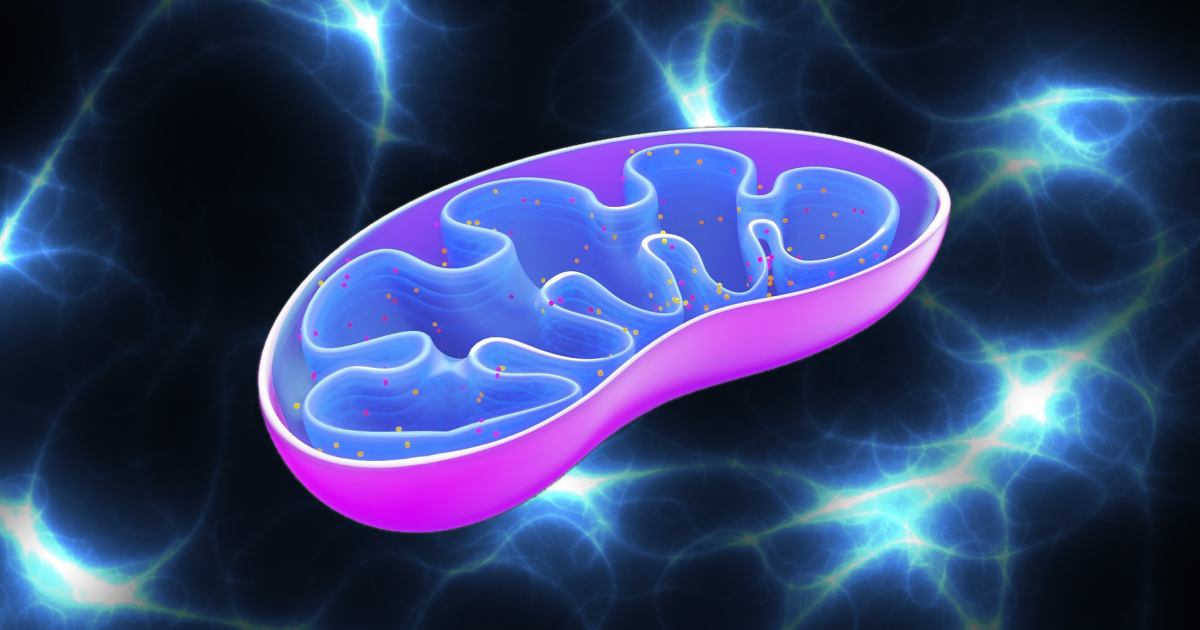
Mitochondria are commonly referred to as “the powerhouse of the cell”. This is because these organelles are responsible for producing ATP, the body’s currency of energy, through oxidative phosphorylation, and they have their own set of DNA that enables them to do this. Their role extends even further, to the regulation of calcium homeostasis, the generation of metabolic precursors, the production of reactive oxygen species (ROS) and influencing immune response.
These organelles, although once bacteria, work with our cells, communicating with the nucleus and other organelles. This helps the cell to function, adapt to stress and plays a role in deciding the fate of a cell during development or disease. Because they are involved in so many aspects of cellular health, they are also considered key targets for therapeutic interventions that aim to treat various diseases. This article will go over the role mitochondria play in health and what mitochondrial peptides are, with a focus on MOTS-c.
Mitochondrial Dysfunction and Disease
With mitochondria being such an essential part of the proper functioning of a cell, it comes as no surprise that mitochondrial dysfunction, dysregulation or mutation is linked to many diseases, including:
- Neurodegenerative diseases: Alzheimer’s disease, Parkinson’s disease, Amyotrophic lateral sclerosis and Huntington’s disease are all linked to mitochondrial dysfunction. The mechanisms involved in the development of these diseases include impairment of the electron transport chain, excess ROS, defective mitophagy and mutations in mitochondrial DNA, which lead to neuronal energy failure and cell death1.
- Metabolic and endocrine diseases: Type 2 diabetes, insulin resistance, obesity and metabolic syndrome are brought about by mitochondrial dysfunction in the liver, muscle, adipose tissue and pancreas, which disrupts ATP production, increases ROS and alters insulin signalling2.
- Cancer and age related conditions: Many cancers display altered mitochondrial metabolism and ROS signalling. Age related disorders, such as cognitive decline and frailty are linked to cumulative mitochondrial damage and chronic inflammation3,4.
- Cardiovascular disease: Poor mitochondrial health leads to an energy deficit, excess ROS and mitochondrial DNA damage in cardiac and vascular cells, leading to harmful remodelling, arrhythmias and vascular dysfunction5.
Some mutations have been identified in mitochondrial DNA and nuclear mitochondrial genes that can lead to several different diseases, including severe conditions such as MELAS, which causes stroke-like episodes, lactic acidosis, muscle weakness, hearing loss and diabetes6.
Mitochondrial dysfunction is also implicated in several other diseases, such as autoimmune diseases, ocular diseases and sepsis3, demonstrating that the proper functioning of the mitochondria is vital for preventing many chronic diseases. But there are several factors that we know can have a beneficial influence on mitochondrial health.
Factors Benefitting Mitochondrial Function
The function of mitochondria is to produce energy and respond to stress, so lifestyle choices that promote this normal function are generally beneficial and include:
- Physical activity: Regular exercise is a potent booster of mitochondrial health. It increases mitochondrial biogenesis, respiration and ATP synthesis in muscles, improving metabolism throughout the entire body. In adults with metabolic syndrome, aerobic and resistance training was found to provide significant improvements in mitochondrial function7.
- Diet: Diets that are lower in sugar and long chain saturated fats, but higher in monounsaturated, polyunsaturated and medium chain fats improve mitochondrial function. Additionally, periods of energy restriction, such as through intermittent fasting, enhance mitochondrial quality control and function8.
In this article, we will take a closer look at experimental enhancement of mitochondrial function, which is achieved using peptides derived from the mitochondria themselves.
Mitochondrial Derived Peptides
Mitochondrial derived peptides are small bioactive peptides that regulate mitochondrial function and cellular metabolism. They are encoded within the MT-ND4, MT-RNR1 and MT-RNR2 genes of mitochondrial DNA. These regions encode the ND4 protein and mitochondrial ribosomal subunits, respectively, but within these sequences are short open reading frames that can be translated into small peptides. The peptides that we currently know of include humanin, small humanin-like peptides, MTALTND4 and MOTS-c.
Humanin
The MT-RNR2 gene encodes the 16S mitochondrial ribosomal RNA. This region also contains a short open reading frame which encodes the Humanin peptide. Humanin acts as a cytoprotective compound, by binding to proapoptotic proteins, inhibiting apoptosis. It can also interact with cell surface receptors, activating signalling pathways that regulate cell survival, differentiation and proliferation9.
It has been found to reduce oxidative stress and improve mitochondrial function, making it a potentially useful compound for the treatment of neurodegenerative diseases, aging, diabetes, infertility and cardiovascular disorders10–12. Its expression is known to decrease with age and menopause and its decline is correlated with an increase in age related diseases13.
Small Humanin-like Peptides (SHLPs)
There are 6 SHLPs encoded within the 16S ribosomal RNA region. These peptides are all closely related to humanin and have diverse biological functions, such as regulation of cell viability, apoptosis reduction and enhancement of mitochondrial metabolism14. Overall, they contribute to metabolic regulation and stress resistance, giving them potential use in the treatment of age-related diseases, diabetes and cardiovascular conditions.
MTALTND4
MTALTND4 is a 99 amino acid polypeptide encoded by an alternative open reading frame within the MT-ND4 gene. It localises to mitochondria and the cytoplasm and has also been detected in plasma, indicating that it may have systemic effects. It influences mitochondrial bioenergetics and cellular physiology, decreasing oxygen consumption and increasing ATP content of cells and ROS efflux15. This peptide was only discovered in 2023, so we still have much to uncover about its role.
MOTS-c
The MT-RNR1 gene encodes the 12S mitochondrial ribosomal RNA and also contains the short open reading frame, which encodes MOTS-c. MOTS-c is a mitochondrial peptide that helps to control metabolism, stress response and aspects of aging and disease. The research on this peptide has highlighted several potential therapeutic uses and advantages over humanin, which we will go over in more detail.
MOTS-c
MOTS-c is typically produced by the mitochondria in response to metabolic stress. It does this by translocating to the nucleus, where it acts on several cellular pathways.
Mechanism of Action
- Activation of Antioxidant Response Elements: MOTS-c can migrate into the nucleus of the cell to activate the production of antioxidants.
- Inhibition of the Folate Cycle and de novo Purine Biosynthesis: MOTS-c inhibits the folate cycle. This cycle is responsible for producing formate, which is used for de novo purine synthesis. De novo purine synthesis supports rapidly diving cells, including cancer cells, and inhibiting this pathway can lead to the death of cancer cells16, improve metabolic health by reducing weight gain and promoting thermogenesis17 and disrupt viral replication18.
- Activation of AMPK: The inhibition of the folate cycle and de novo purine synthesis causes a buildup of AICAR, which activates AMPK, a master energy sensor. The activation of AMPK:
- Increases glucose uptake and improves insulin sensitivity, particularly in skeletal muscle.
- Promotes the burning of fat, brown fat activation and “browning” of white fat.
- Modulates inflammatory and antioxidant signalling19.
Too Much and Too Little
In cases where MOTS-c is supplemented or overexpressed, only positive health effects have been observed so far, and this will be covered in more detail in the preclinical findings section later on.
There is no medical use associated with MOTS-c antagonism yet, but we can learn a great deal about this peptide from knockdown, inhibition and functional loss models.
- When the translation of MOTS-c was prevented, increases in ROS were seen, along with a reversal of antioxidant and antifibrotic effects20.
- A decrease in MOTS-c was found to enhance mTORC1 signalling in T cells, which is linked to dysregulation of the immune system21.
- Hypoxia-conditioned muscle cells secrete conditioned, protective media, but silencing MOTS-c abolishes these protective effects22.
- Suppression of MOTS-c by DNA-dependent protein kinase catalytic subunit led to endothelial dysfunction, which contributed to myocardial microvascular injury23.
These experiments emphasise the importance of this peptide. By disabling the expression of MOTS-c, its protective effects are removed, and oxidative stress, inflammation and fibrosis are enhanced instead.
Preclinical Findings
So, what happens when we supplement MOTS-c? Researchers have tested this in a variety of different preclinical settings and below is a summary of some of their findings.
- Metabolic and endocrine benefits: It prevents diet and age induced obesity and insulin resistance, improves glucose metabolism and adipose homeostasis19. By improving mitochondrial metabolism and modulating cell survival, it helps to improve non-alcoholic fatty liver disease24. It modulates insulin and glucagon secretion and islet cell survival25.
- Exercise performance: MOTS-c enhances glucose uptake, reduces myostatin, supports muscle differentiation, protects against atrophy and improves exercise capacity and age related decline26.
- Brain health: It reduces neuropathic pain through its influence over the AMPK pathway, by which it inhibits microglia and protects from oxidative damage27.
- Heart health: It protects against cardiomyopathy brought about by diabetes or sepsis and pressure overload heart failure by activating antioxidant, anti-apoptotic and AMPK-linked pathways28–30.
- Lung health: It reduces injury to the lungs by reducing inflammation, boosting glycolysis and reducing ferroptosis31.
- Cancer: It was found to suppress ovarian cancer growth by binding to and decreasing the stability of LARS1, an enzyme that contributes to oncogenic progression32.
- Longevity: It helps to maintain metabolic balance, improve healthspan, exercise capacity and age-related decline26.
Despite the many studies that have been conducted on MOTS-c, we cannot say with any great certainty that it will exert these benefits if we were to supplement with it. The studies mentioned thus far are all pre-clinical, consisting of in vitro tests and tests on animal models. Although these give us some indication of how the peptide might behave, we will not know for certain what we can expect it to do in a human until we test it in a large number of different human populations.
CB4211: A MOTS-c Analogue
CB4211, an analogue of MOTS-c, has been tested in preclinical trials and was found to increase the sensitivity of the insulin receptor and improve glucose homeostasis. In mouse models of obesity, it prolonged blood glucose reduction, strengthening the evidence for improved insulin sensitivity. It also reduces free fatty acid release, improves non alcoholic fatty liver disease and decreases fat mass in animal models33.
A clinical test has been done on an analogue of MOTS-c, with hopeful results. Obese subjects with non alcoholic fatty liver disease were given CB4211 subcutaneously once daily for 4 weeks, in which time it:
- Reduced fasting glucose levels
- Reduced body weight and
- Reduced biomarkers of liver injury
The only noted adverse events associated with the treatment were mild to moderate injection site reactions34.
It is important to note that CB4211 is not the same as MOTS-c. It may have modifications to its sequence and terminal ends to enhance its stability and binding. The exact structure of this compound is currently a trade secret, so we do not know how similar it is to endogenous MOTS-c. So, as hopeful as the results of this clinical trial are, we do not know if MOTS-c will produce similar results.
Safety Concerns
The main concern around the use of MOTS-c is that there are no human studies on its safety, so we are uncertain of what risks could be involved or what short and long-term side effects might be experienced if one were to supplement it.
We do know that MOTS-c artificially stimulates a stress response, which may be beneficial in the short term, as shown from studies on animal models, but we do not yet know what simulating this stress response chronically can do to the body.
Conclusion
Mitochondrial peptides are a fascinating topic, with research highlighting their potential as therapeutic compounds for the treatment of a wide range of diseases. MOTS-c is of particular interest to researchers due to its ability to enhance or correct mitochondrial function. Hopefully, we will see some human studies on this peptide in the future, so we can better understand its safety and efficacy in treating diseases.
Buy MOTS-c for your research here.
References
- Klemmensen MM, Borrowman SH, Pearce C, Pyles B, Chandra B. Mitochondrial dysfunction in neurodegenerative disorders. Neurotherapeutics. 2024;21(1):e00292. doi:10.1016/j.neurot.2023.10.002
- Zong Y, Li H, Liao P, et al. Mitochondrial dysfunction: mechanisms and advances in therapy. Signal Transduct Target Ther. 2024;9(1):124. doi:10.1038/s41392-024-01839-8
- Xu X, Pang Y, Fan X. Mitochondria in oxidative stress, inflammation and aging: from mechanisms to therapeutic advances. Signal Transduct Target Ther. 2025;10(1):190. doi:10.1038/s41392-025-02253-4
- Amorim JA, Coppotelli G, Rolo AP, Palmeira CM, Ross JM, Sinclair DA. Mitochondrial and metabolic dysfunction in ageing and age-related diseases. Nat Rev Endocrinol. 2022;18(4):243-258. doi:10.1038/s41574-021-00626-7
- Yang HM. Mitochondrial Dysfunction in Cardiovascular Diseases. Int J Mol Sci. 2025;26(5). doi:10.3390/ijms26051917
- Alston CL, Rocha MC, Lax NZ, Turnbull DM, Taylor RW. The genetics and pathology of mitochondrial disease. J Pathol. 2017;241(2):236-250. doi:10.1002/path.4809
- Memme JM, Erlich AT, Phukan G, Hood DA. Exercise and mitochondrial health. J Physiol. 2021;599(3):803-817. doi:10.1113/JP278853
- Lemos G de O, Torrinhas RS, Waitzberg DL. Nutrients, Physical Activity, and Mitochondrial Dysfunction in the Setting of Metabolic Syndrome. Nutrients. 2023;15(5):1217. doi:10.3390/nu15051217
- Kim SJ, Guerrero N, Wassef G, et al. The mitochondrial-derived peptide humanin activates the ERK1/2, AKT, and STAT3 signaling pathways and has age-dependent signaling differences in the hippocampus. Oncotarget. 2016;7(30):46899-46912. doi:10.18632/oncotarget.10380
- Alqahtani SM, Al-Kuraishy HM, Al-Gareeb AI, et al. The neuroprotective role of Humanin in Alzheimer’s disease: The molecular effects. Eur J Pharmacol. 2025;998:177510. doi:10.1016/j.ejphar.2025.177510
- Yen K, Lee C, Mehta H, Cohen P. The emerging role of the mitochondrial-derived peptide humanin in stress resistance. J Mol Endocrinol. 2013;50(1):R11-19. doi:10.1530/JME-12-0203
- Rochette L, Meloux A, Zeller M, Cottin Y, Vergely C. Role of humanin, a mitochondrial-derived peptide, in cardiovascular disorders. Arch Cardiovasc Dis. 2020;113(8):564-571. doi:10.1016/j.acvd.2020.03.020
- Coradduzza D, Congiargiu A, Chen Z, et al. Humanin and Its Pathophysiological Roles in Aging: A Systematic Review. Biology. 2023;12(4):558. doi:10.3390/biology12040558
- Thamarai Kannan H, Issac PK, Dey N, Guru A, Arockiaraj J. A Review on Mitochondrial Derived Peptide Humanin and Small Humanin-Like Peptides and Their Therapeutic Strategies. Int J Pept Res Ther. 2023;29(5):86. doi:10.1007/s10989-023-10558-7
- Kienzle L, Bettinazzi S, Choquette T, et al. A small protein coded within the mitochondrial canonical gene nd4 regulates mitochondrial bioenergetics. BMC Biol. 2023;21(1):111. doi:10.1186/s12915-023-01609-y
- Nengroo MA, Klein AT, Carr HS, et al. Accumulation of succinate suppresses de novo purine synthesis through succinylation-mediated control of the mitochondrial folate cycle. Mol Cell. 2025;85(22):4215-4228.e9. doi:10.1016/j.molcel.2025.10.002
- Myers JW, Park WY, Eddie AM, et al. Systemic inhibition of de novo purine biosynthesis prevents weight gain and improves metabolic health by increasing thermogenesis and decreasing food intake. Physiology. Preprint posted online November 1, 2024. doi:10.1101/2024.10.28.620705
- Wang Y, Wang W, Xu L, et al. Cross Talk between Nucleotide Synthesis Pathways with Cellular Immunity in Constraining Hepatitis E Virus Replication. Antimicrob Agents Chemother. 2016;60(5):2834-2848. doi:10.1128/AAC.02700-15
- Lee C, Zeng J, Drew BG, et al. The Mitochondrial-Derived Peptide MOTS-c Promotes Metabolic Homeostasis and Reduces Obesity and Insulin Resistance. Cell Metab. 2015;21(3):443-454. doi:10.1016/j.cmet.2015.02.009
- Chen F, Li Z, Wang T, et al. MOTS-c mimics exercise to combat diabetic liver fibrosis by targeting Keap1-Nrf2-Smad2/3. Sci Rep. 2025;15(1):18460. doi:10.1038/s41598-025-03526-2
- Kong BS, Min SH, Lee C, Cho YM. Mitochondrial-encoded MOTS-c prevents pancreatic islet destruction in autoimmune diabetes. Cell Rep. 2021;36(4):109447. doi:10.1016/j.celrep.2021.109447
- Wang D dan, Xu B, Sun J jiao, et al. MOTS-c mimics remote ischemic preconditioning in protecting against lung ischemia-reperfusion injury by alleviating endothelial barrier dysfunction. Free Radic Biol Med. 2025;229:127-138. doi:10.1016/j.freeradbiomed.2025.01.016
- Zou R, Shi W, Chang X, et al. The DNA-dependent protein kinase catalytic subunit exacerbates endotoxemia-induced myocardial microvascular injury by disrupting the MOTS-c/JNK pathway and inducing profilin-mediated lamellipodia degradation. Theranostics. 2024;14(4):1561-1582. doi:10.7150/thno.92650
- Lu H, Fan L, Zhang W, et al. The mitochondrial genome-encoded peptide MOTS-c interacts with Bcl-2 to alleviate nonalcoholic steatohepatitis progression. Cell Rep. 2024;43(1):113587. doi:10.1016/j.celrep.2023.113587
- Bień J, Pruszyńska-Oszmałek E, Kołodziejski P, Leciejewska N, Szczepankiewicz D, Sassek M. MOTS-c regulates pancreatic alpha and beta cell functions in vitro. Histochem Cell Biol. 2024;161(6):449-460. doi:10.1007/s00418-024-02274-0
- Reynolds JC, Lai RW, Woodhead JST, et al. MOTS-c is an exercise-induced mitochondrial-encoded regulator of age-dependent physical decline and muscle homeostasis. Nat Commun. 2021;12(1):470. doi:10.1038/s41467-020-20790-0
- Jiang J, Xu L, Yang L, Liu S, Wang Z. Mitochondrial-Derived Peptide MOTS-c Ameliorates Spared Nerve Injury-Induced Neuropathic Pain in Mice by Inhibiting Microglia Activation and Neuronal Oxidative Damage in the Spinal Cord via the AMPK Pathway. ACS Chem Neurosci. 2023;14(12):2362-2374. doi:10.1021/acschemneuro.3c00140
- Wang M, Wang G, Pang X, et al. MOTS-c repairs myocardial damage by inhibiting the CCN1/ERK1/2/EGR1 pathway in diabetic rats. Front Nutr. 2023;9. doi:10.3389/fnut.2022.1060684
- Wu J, Xiao D, Yu K, Shalamu K, He B, Zhang M. The protective effect of the mitochondrial-derived peptide MOTS-c on LPS-induced septic cardiomyopathy. Acta Biochim Biophys Sin. 2023;55(2):285-294. doi:10.3724/abbs.2023006
- Zhong P, Peng J, Hu Y, Zhang J, Shen C. Mitochondrial derived peptide MOTS-c prevents the development of heart failure under pressure overload conditions in mice. J Cell Mol Med. 2022;26(21):5369-5378. doi:10.1111/jcmm.17551
- Shen Z, Lu P, Jin W, et al. MOTS-c Promotes Glycolysis via AMPK–HIF-1α–PFKFB3 Pathway to Ameliorate Cardiopulmonary Bypass–induced Lung Injury. Am J Respir Cell Mol Biol. 2025;73(3):353-368. doi:10.1165/rcmb.2024-0533OC
- Yin Y, Li Y, Ma B, et al. Mitochondrial-Derived Peptide MOTS-c Suppresses Ovarian Cancer Progression by Attenuating USP7-Mediated LARS1 Deubiquitination. Adv Sci. 2024;11(43):e2405620. doi:10.1002/advs.202405620
- GRINDSTAFF K, MAGNAN R, SHANG R, et al. CB4211 Is a Potential Treatment for Metabolic Diseases with a Novel Mechanism of Action—Sensitization of the Insulin Receptor. Diabetes. 2018;67(Supplement_1):233-LB. doi:10.2337/db18-233-LB
- CohBar, Inc. A Phase 1a/1b Study of Safety, Tolerability, and Pharmacokinetics of CB4211 in Healthy Non-Obese Subjects and Subjects With Nonalcoholic Fatty Liver Disease. clinicaltrials.gov; 2021. Accessed February 6, 2026. https://clinicaltrials.gov/study/NCT03998514