
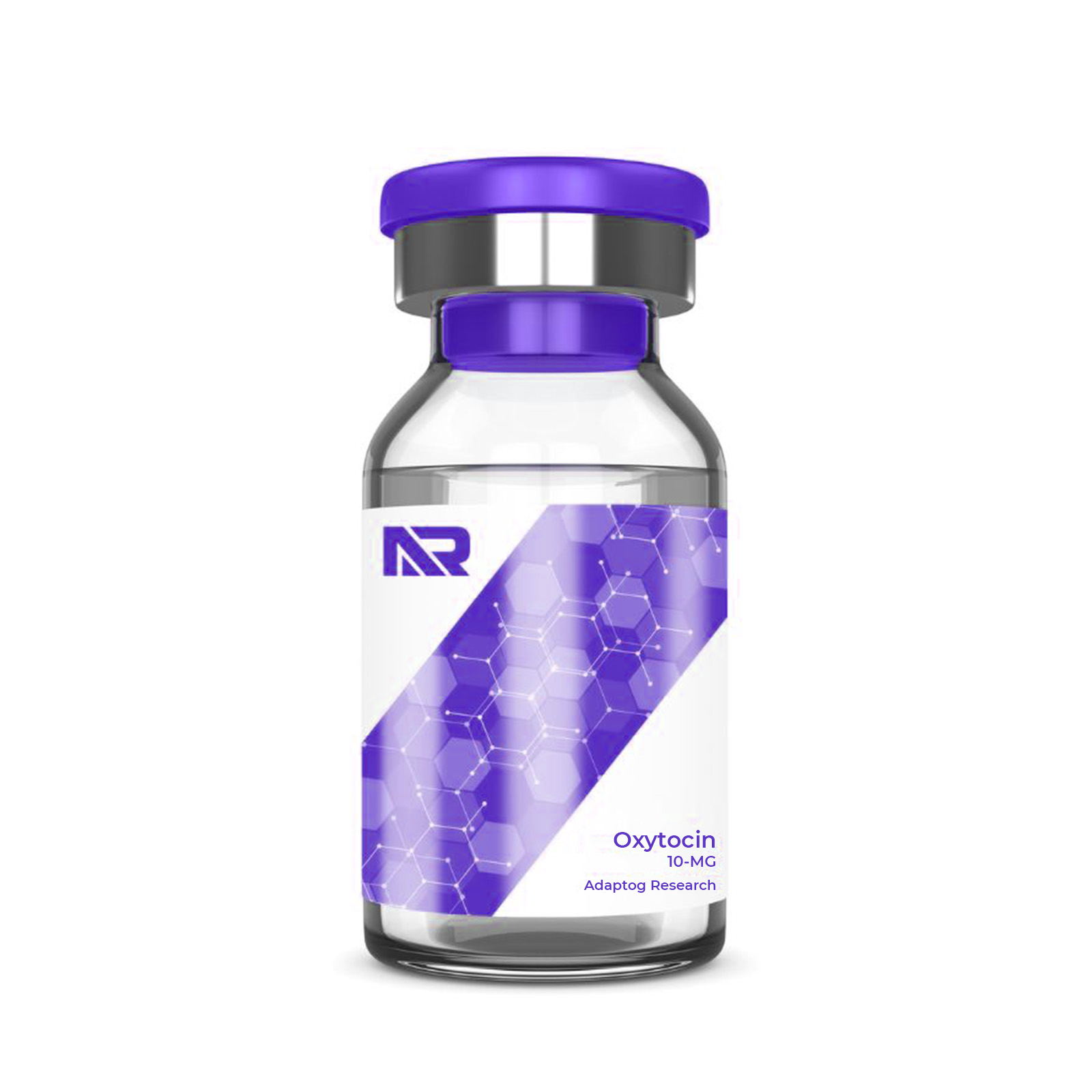
Oxytocin is a naturally occurring hormone commonly associated with labour, lactation, and bonding. It binds to oxytocin receptors (OTR), which are present in various tissues, including the uterus, heart, brain, and cardiovascular system. In each of these tissues, it elicits different activities, which have indicated its potential in therapeutic areas other than obstetrics. Oxytocin’s ability to improve metabolism, cardiac health, and aspects of behaviour are of particular interest.
Mechanism of Action
The binding of oxytocin to OTR produces the following effects:
- Neurotransmitter release: It modulates the release of neurotransmitters, such as glutamate, GABA, dopamine, and serotonin in the brain [1]. It typically enhances the inhibition brought about by GABA to influence emotions such as fear, anxiety, and nociception [2].
- Uterine smooth muscle contraction: It is a key driver of labour and postpartum uterine tightening. When oxytocin binds to OTR, it causes the smooth muscles in the uterus to contract with increased frequency and amplitude. It also sensitises these muscles to contraction signalling [3].
- Cardiovascular actions: Oxytocin receptors are present in the atria, ventricles, and cardiac vessels, meaning that oxytocin can directly affect the cardiac system. It is known to reduce blood pressure by promoting vasodilation and also lowers heart rate [4].
- Immunomodulatory effects: Oxytocin can shift the immune system towards a more anti-inflammatory, pro-healing, and homeostatic state under certain conditions. OTRs are expressed on immune cells, modulating their cytokine production and survival. This helps to reduce tissue injury and improve outcomes in models of inflammatory disease [5].
Therapeutic Potential
Oxytocin is used in obstetrics to induce or help with the progression of labour, promote uterine contraction and prevent postpartum haemorrhage. Its use in this area of medicine is well-established, and it is considered generally safe.
It is being investigated for its use in:
- Neuropsychiatric disorders: Intranasal oxytocin is being investigated for its use in managing autism spectrum disorder, schizophrenia, depression, anxiety, PTSD, social dysfunction, and frontotemporal dementia. There are mixed results regarding its effectiveness, but some researchers believe it may be of therapeutic value in treating some of these conditions, if not as a primary medicine, possibly as an adjunct [6,7].
- Metabolic disorders: Oxytocin could help to manage obesity and diabetes. Small-scale trials have found that it reduces food intake, promotes weight loss, promotes lipolysis, and improves insulin sensitivity. However, the duration of these studies was short, so long-term safety remains uncertain. Some studies have not observed the same improvements in certain groups of patients, suggesting it may not be effective for everyone [8,9].
- Cardiovascular protection: It has clear cardioprotective effects and could potentially be used to prevent atherosclerosis and ischemic heart disease due to its ability to reduce inflammation, apoptosis, and promote vascularisation [4]. In ischemia reperfusion and myocardial infarction models, it significantly reduced infarct size, apoptosis, fibrosis, and down-regulated pro-inflammatory cytokines while improving heart function, cardiomyocyte regeneration markers, and increasing angiogenesis [4,10].
- Pain management: Oxytocin can modulate the perception of pain, and it is being studied as an analgesic for chronic and neuropathic pain. Studies on animal models have found that it exerts antinociceptive and anti-inflammatory activity through multiple pathways11. Studies on humans have found that it can modulate pain perception and attenuate chronic pain [12,13]. A meta-analysis found that clinical evidence for oxytocin’s use as an analgesic so far is modest, although it may be of some value as an adjunct [14].
- Addiction: It may help to reduce drug-seeking behaviours and help prevent relapse. It is thought to achieve this by modulating dopamine and glutamate signalling, as well as stress systems. In alcohol, opioid, psychostimulant, nicotine, and cannabis models, it reduces drug-seeking behaviour, attenuates withdrawal symptoms, and prevents or reverses tolerance, sensitisation, and neuroadaptations associated with reward circuits [15,16].
- Relationship enhancement: Given the natural function of this hormone, some researchers have suggested that it could be used to strengthen relational bonds [17]. One study found that intranasal oxytocin significantly increased positive communication during couple conflict discussions [18].
Safety
The use of oxytocin in obstetrics is well established and is considered generally safe; however, excessive dosing can increase the need for emergency C-section delivery and postpartum haemorrhage [19]. In models where OTR was overexpressed in cardiac tissues, it led to dilated cardiomyopathy, fibrosis, and high mortality [20]. When under chronic social stress, it can drive splenic immunosuppression, reducing immune activation [21].
Intranasal oxytocin given for several months in healthy humans did not cause any adverse cardiovascular effects [22], but when given in high or obstetric doses, there have been rare cases of hypertension, reflex tachycardia, and coronary spasm [23].
How It Compares to Other OTR Agonists
[Se-Se]-oxytocin-OH is a selective and more stable agonist of OTR. It can significantly reduce fear in mouse models, produce more regular labour contractions in vitro when compared to oxytocin, and has no activity in human cardiomyocytes. This lack of activity in cardiomyocytes indicates that it may be safer for therapeutic use, given that we know overexpression of OTR can lead to health problems in animal models [24]. This novel compound is currently used purely as a research compound and probe.
Data Sheet
- Application: Research on obstetrics, metabolism, cardioprotection, analgesia, and addiction.
- CAS Number: 50-56-6
- Molecular Weight: 1007.2
- Sequence: CYIQNCPLG
- Chemical Formula: C₄₃H₆₆N₁₂O₁₂S₂
- Synonyms: Syntocinon
- Storage: Keep refrigerated at 2-8°C until use. For long-term storage, keep at -20°C.
- Reconstitution: Reconstitute in sterile water. The reconstituted solution is stable for up to 30 days at 2-8°C.
- Organoleptic Profile: White to off-white lyophilised powder
- Physical Form: Solid
Conclusion
Oxytocin is commonly used in obstetrics, but researchers are looking at other ways to utilise this hormone for the treatment of various conditions and diseases. It has demonstrated some strong cardioprotective activity, metabolic benefits, the ability to curb addiction, and the potential to treat anxiety in those with neurological conditions. Meta-analyses tend to suggest that oxytocin’s efficacy is inconclusive or modest, pointing more towards its use as an adjunct as opposed to a primary treatment.
References
- Xiao L, Priest MF, Kozorovitskiy Y. Oxytocin functions as a spatiotemporal filter for excitatory synaptic inputs to VTA dopamine neurons. Manzoni OJ, ed. eLife. 2018;7:e33892. doi:10.7554/eLife.33892
- Triana-Del Rio R, Ranade S, Guardado J, LeDoux J, Klann E, Shrestha P. The modulation of emotional and social behaviors by oxytocin signaling in limbic network. Front Mol Neurosci. 2022;15. doi:10.3389/fnmol.2022.1002846
- Arrowsmith S, Wray S. Oxytocin: Its Mechanism of Action and Receptor Signalling in the Myometrium. J Neuroendocrinol. 2014;26(6):356-369. doi:10.1111/jne.12154
- Jankowski M, Broderick TL, Gutkowska J. The Role of Oxytocin in Cardiovascular Protection. Front Psychol. 2020;11. doi:10.3389/fpsyg.2020.02139
- Yuan L, Liu S, Bai X, et al. Oxytocin inhibits lipopolysaccharide-induced inflammation in microglial cells and attenuates microglial activation in lipopolysaccharide-treated mice. J Neuroinflammation. 2016;13(1):77. doi:10.1186/s12974-016-0541-7
- Cochran DM, Fallon D, Hill M, Frazier JA. The Role of Oxytocin in Psychiatric Disorders: A Review of Biological and Therapeutic Research Findings. Harv Rev Psychiatry. 2013;21(5):219-247. doi:10.1097/HRP.0b013e3182a75b7d
- Huang MH, Zeng BS, Tseng PT, et al. Treatment Efficacy of Pharmacotherapies for Frontotemporal Dementia: A Network Meta-Analysis of Randomized Controlled Trials. Am J Geriatr Psychiatry. 2023;31(12):1062-1073. doi:10.1016/j.jagp.2023.06.013
- Lawson EA. The effects of oxytocin on eating behaviour and metabolism in humans. Nat Rev Endocrinol. 2017;13(12):700-709. doi:10.1038/nrendo.2017.115
- Goll N, Moszka N, Kantartzis K, et al. Oxytocin does not acutely improve glucose tolerance in men with type 2 diabetes. Diabetes Obes Metab. 2024;26(10):4562-4570. doi:10.1111/dom.15812
- Ondrejcakova M, Barancik M, Bartekova M, Jezova TR Daniela. Prolonged oxytocin treatment in rats affects intracellular signaling and induces myocardial protection against infarction. Gen Physiol Biophys. 2012;31(03):261-270. doi:10.4149/gpb_2012_030
- Nishimura H, Yoshimura M, Shimizu M, et al. Endogenous oxytocin exerts anti-nociceptive and anti-inflammatory effects in rats. Commun Biol. 2022;5(1):907. doi:10.1038/s42003-022-03879-8
- Paloyelis Y, Krahé C, Maltezos S, Williams SC, Howard MA, Fotopoulou A. The Analgesic Effect of Oxytocin in Humans: A Double‐Blind, Placebo‐Controlled Cross‐Over Study Using Laser‐Evoked Potentials. J Neuroendocrinol. 2016;28(4):jne.12347. doi:10.1111/jne.12347
- Boll S, Ueltzhoeffer K, Roth C, et al. Pain-modulating effects of oxytocin in patients with chronic low back pain. Neuropharmacology. 2020;171:108105. doi:10.1016/j.neuropharm.2020.108105
- Mekhael AA, Bent JE, Fawcett JM, et al. Evaluating the efficacy of oxytocin for pain management: An updated systematic review and meta-analysis of randomized clinical trials and observational studies. Can J Pain. 2023;7(1):2191114. doi:10.1080/24740527.2023.2191114
- King CE, Gano A, Becker HC. The role of oxytocin in alcohol and drug abuse. Brain Res. 2020;1736:146761. doi:10.1016/j.brainres.2020.146761
- Peris J, Steck MR, Krause EG. Oxytocin treatment for alcoholism: Potential neurocircuitry targets. Neuropharmacology. 2020;171:108091. doi:10.1016/j.neuropharm.2020.108091
- Wudarczyk OA, Earp BD, Guastella A, Savulescu J. Could intranasal oxytocin be used to enhance relationships? Research imperatives, clinical policy, and ethical considerations. Curr Opin Psychiatry. 2013;26(5):474-484. doi:10.1097/YCO.0b013e3283642e10
- Ditzen B, Schaer M, Gabriel B, Bodenmann G, Ehlert U, Heinrichs M. Intranasal Oxytocin Increases Positive Communication and Reduces Cortisol Levels During Couple Conflict. Biol Psychiatry. 2009;65(9):728-731. doi:10.1016/j.biopsych.2008.10.011
- Payrastre C, Debost-Legrand A, Roussel L, Accoceberry M, Rouzaire M, Gallot D. Association between total oxytocin dose and maternal and neonatal morbidity during labour induction: a retrospective study. BMC Pregnancy Childbirth. 2025;25(1):857. doi:10.1186/s12884-025-08003-2
- Jung C, Wernly B, Bjursell M, et al. Cardiac-Specific Overexpression of Oxytocin Receptor Leads to Cardiomyopathy in Mice. J Card Fail. 2018;24(7):470-478. doi:10.1016/j.cardfail.2018.05.004
- Zhang Y, Chen H, Cao J, Zhou S, Ma Y, Jing Y. Oxytocin‐Mediate Modulation of Splenic Immunosuppression in Chronic Social Stress Through Neuroendocrine Pathways. Adv Sci. 2025;12(25):2500849. doi:10.1002/advs.202500849
- Busnelli M, Dagani J, de Girolamo G, et al. Unaltered Oxytocin and Vasopressin Plasma Levels in Patients with Schizophrenia After 4 Months of Daily Treatment with Intranasal Oxytocin. J Neuroendocrinol. 2016;28(4). doi:10.1111/jne.12359
- Wang P, Wang SC, Yang H, et al. Therapeutic Potential of Oxytocin in Atherosclerotic Cardiovascular Disease: Mechanisms and Signaling Pathways. Front Neurosci. 2019;13. doi:10.3389/fnins.2019.00454
- Muttenthaler M, Andersson Å, Vetter I, et al. Subtle modifications to oxytocin produce ligands that retain potency and improved selectivity across species. Sci Signal. 2017;10(508):eaan3398. doi:10.1126/scisignal.aan3398
Reviews
There are no reviews yet.