
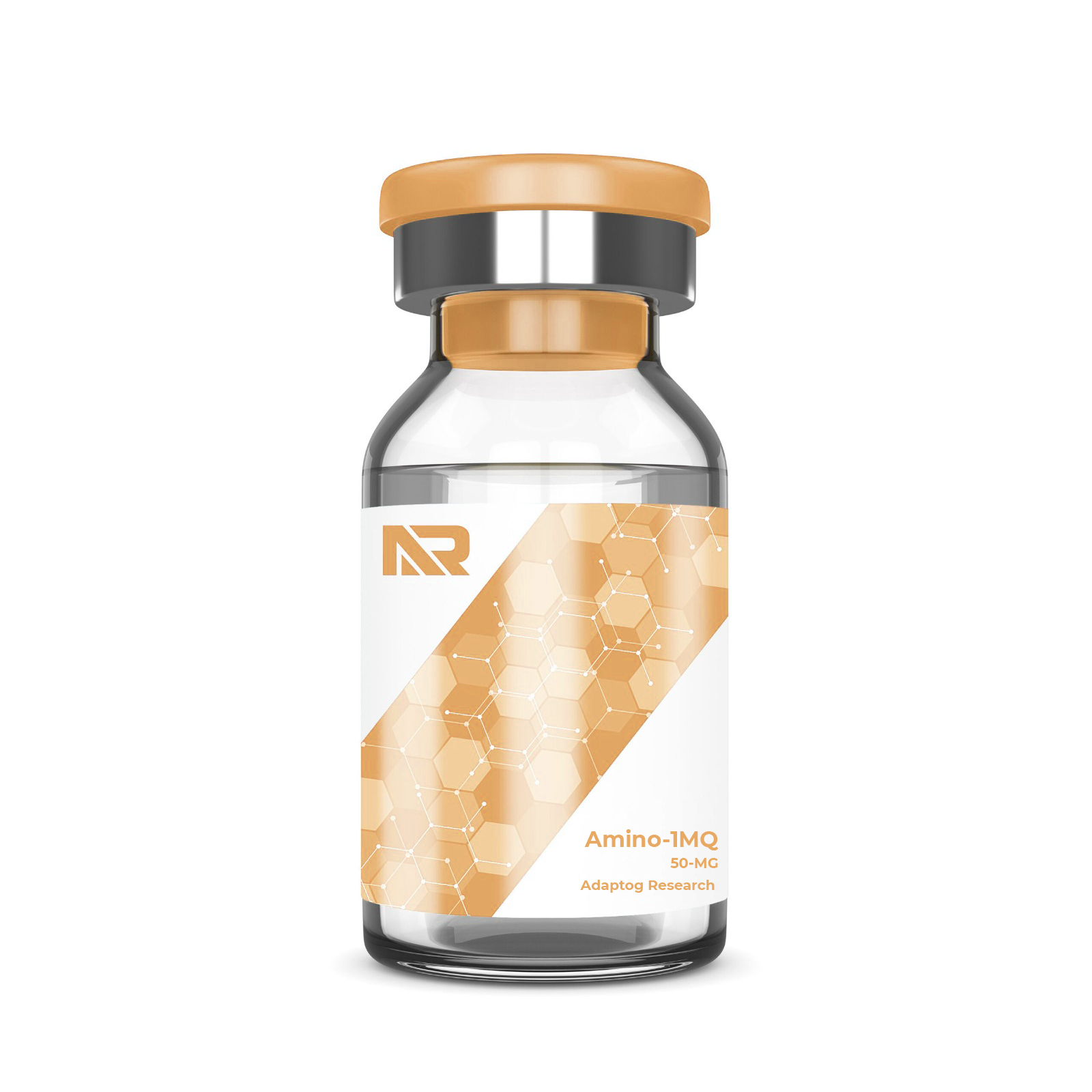
5-Amino-1MQ: A Potential Breakthrough in Metabolic Health
5-Amino-1MQ may be advantageous to the following people in clinical settings:
- Individuals with metabolic syndrome
- People with obesity or weight management challenges
- Those with insulin resistance
- Individuals seeking to support healthy body composition
5-Amino-1-methylquinolinium (5-Amino-1MQ) is a small-molecule inhibitor of nicotinamide N-methyltransferase (NNMT), an enzyme that plays a significant role in cellular metabolism and energy regulation. Research has demonstrated its potential to influence metabolic pathways, making it a compound of interest for metabolic health investigations (1).
Mechanism of Action
5-Amino-1MQ works by acting as a potent NNMT inhibitor. NNMT, which stands for nicotinamide N-methyltransferase, plays an important part in how cells handle energy. When this enzyme becomes overactive, it reduces energy efficiency and results in the body storing more fat. Blocking NNMT allows 5-amino-1-methyl-4-quinolinamine (1mq) to help cells regain proper metabolic performance.
Taking 5-Amino-1MQ has an effect on raising your body’s NAD+ levels. These levels are key to energy production and cellular repair. When NAD+ levels go up, mitochondria, which provide power for your cells, work better. These tiny cell powerhouses make ATP, the main energy source for your body. With more energy being produced, your body burns fat more effectively and increases your metabolism (2).
This peptide also plays a role in improving how your body handles insulin, making it better at controlling blood sugar. Better glucose processing means less sugar is stored as fat, and your muscles get enough energy to work at their best. Additionally, 5-amino-1-methylpyridine supports DNA repair and strengthens cells, which supports its anti-ageing effects (3).
Research indicates that 5-Amino-1MQ can improve gut health. It helps increase beneficial bacteria like Lactobacillus, which supports a strong digestive system. This can contribute to better weight management and overall well-being (4).
Potential Benefits
The mechanisms through which 5-Amino-1MQ operates suggest several potential benefits:
- Weight management: Preclinical studies have demonstrated that 5-Amino-1MQ treatment resulted in significant reductions in body weight and fat mass in diet-induced obese mice. Animals treated with 5-Amino-1MQ showed a 7% reduction in body weight compared to controls over four weeks (5).
- Metabolic syndrome: Boosting NAD+ levels and triggering metabolic pathways, 5-Amino-1MQ may help improve metabolic aspects tied to metabolic syndrome. These improvements might include better insulin sensitivity and a healthier lipid profile (6).
- Energy expenditure: Research suggests that NNMT inhibition increases energy expenditure and thermogenesis in adipose tissue. This effect may contribute to the observed reductions in body weight and fat mass (7).
- Insulin sensitivity: Studies have indicated that 5-Amino-1MQ treatment improves glucose tolerance and insulin sensitivity in animal models, suggesting potential applications for metabolic health support (8).
- Cellular senescence: Elevated NAD+ levels resulting from NNMT inhibition may influence cellular ageing processes and support healthy cellular function, though further research is required to elucidate these effects fully (9).
Safety
Recent studies on 5-Amino-1MQ are in their early stages and focus on preclinical testing. There is limited human safety data available. Research on animals has shown the following results:
- General tolerability: Rodent studies indicated that 5-Amino-1MQ was given at therapeutic doses without causing major harmful effects (10).
- Metabolic effects: Standard doses did not show significant changes in markers of liver or kidney function during preclinical tests (11).
- Long-term safety: Researchers haven’t yet confirmed extended safety for humans, as tests with people are still in their early stages.
Here are some important points to consider:
- Responses can differ from person to person.
- How the compound interacts with other substances is not yet clear.
- More studies are needed to understand its long-term effects.
Researchers should use 5-Amino-1MQ in controlled settings under the supervision of trained professionals.
How It Compares to Other Metabolic Modulators
5-Amino-1MQ works in a way that’s different from usual metabolic treatments:
- Compared to thermogenic compounds: Most thermogenics rely on activating the central nervous system and boosting the release of catecholamines. In contrast, 5-Amino-1MQ changes how cells process energy by boosting NAD+ levels (12).
- Compared to metformin: Metformin primarily activates AMPK and reduces hepatic glucose production, whereas 5-Amino-1MQ works upstream by increasing NAD+ availability, which subsequently influences multiple metabolic pathways (13).
- Compared to NAD+ precursors: Direct NAD+ precursors such as nicotinamide riboside (NR) and nicotinamide mononucleotide (NMN) increase NAD+ through supplementation, while 5-Amino-1MQ achieves this by preventing NAD+ precursor degradation through NNMT inhibition (14).
- Specificity: 5-Amino-1MQ demonstrates high selectivity for NNMT inhibition, which may result in more targeted metabolic effects compared to broader-acting compounds (15).
Chemical Identifiers
- CAS Number: 42464-96-0
- ChEMBL: ChEMBL4116828
- ChemSpider: 76713110
- PubChem CID: 950107
- UNII: K9G33W2TTZ
- Molecular Formula: C10H11N2
Conclusion
5-Amino-1MQ is a research-supported option that might help boost metabolic health by working on a cellular level. Early studies have shown that it could play a role in managing weight and improving metabolic health, though human data is still limited.
Researchers are still studying 5-Aminio-1MQ, meaning that potentially in the future, we could see its approval for medical professionals to prescribe for metabolic and weight-related conditions.
5-Aminio-1MQ is not FDA-approved and is sold for research purposes only.
References
- Small molecule inhibitor of nicotinamide N-methyltransferase shows anti-proliferative activity in HeLa cells – PubMed
- NAD+ metabolism enzyme NNMT in cancer-associated fibroblasts drives tumor progression and resistance to immunotherapy by modulating macrophages in urothelial bladder cancer – PubMed
- Peripheral intravenous infusion of amino acids – PubMed
- Changes in amino acid concentrations and the gut microbiota composition are implicated in the mucosal healing of ulcerative colitis and can be used as noninvasive diagnostic biomarkers – PubMed
- Reduced calorie diet combined with NNMT inhibition establishes a distinct microbiome in DIO mice – PubMed
- Nicotinamide N-methyltransferase: At the crossroads between cellular metabolism and epigenetic regulation – PMC
- Genetic Nicotinamide N-Methyltransferase (Nnmt) Deficiency in Male Mice Improves Insulin Sensitivity in Diet-Induced Obesity but Does Not Affect Glucose Tolerance – PubMed
- Selective and membrane-permeable small molecule inhibitors of nicotinamide N-methyltransferase reverse high fat diet-induced obesity in mice – PubMed
- NAD+ Intermediates: The Biology and Therapeutic Potential of NMN and NR – PubMed
- Association of nicotinamide-N-methyltransferase mRNA expression in human adipose tissue and the plasma concentration of its product, 1-methylnicotinamide, with insulin resistance – PubMed
- Nicotinamide N-Methyltransferase: More Than a Vitamin B3 Clearance Enzyme – PubMed
- NAD⁺ in aging, metabolism, and neurodegeneration – PubMed
- The mechanisms of action of metformin – PubMed
- Therapeutic Potential of NAD-Boosting Molecules: The In Vivo Evidence – PubMed
- Macrocyclic peptides as allosteric inhibitors of nicotinamide N-methyltransferase (NNMT) – PubMed


Reviews
There are no reviews yet.