
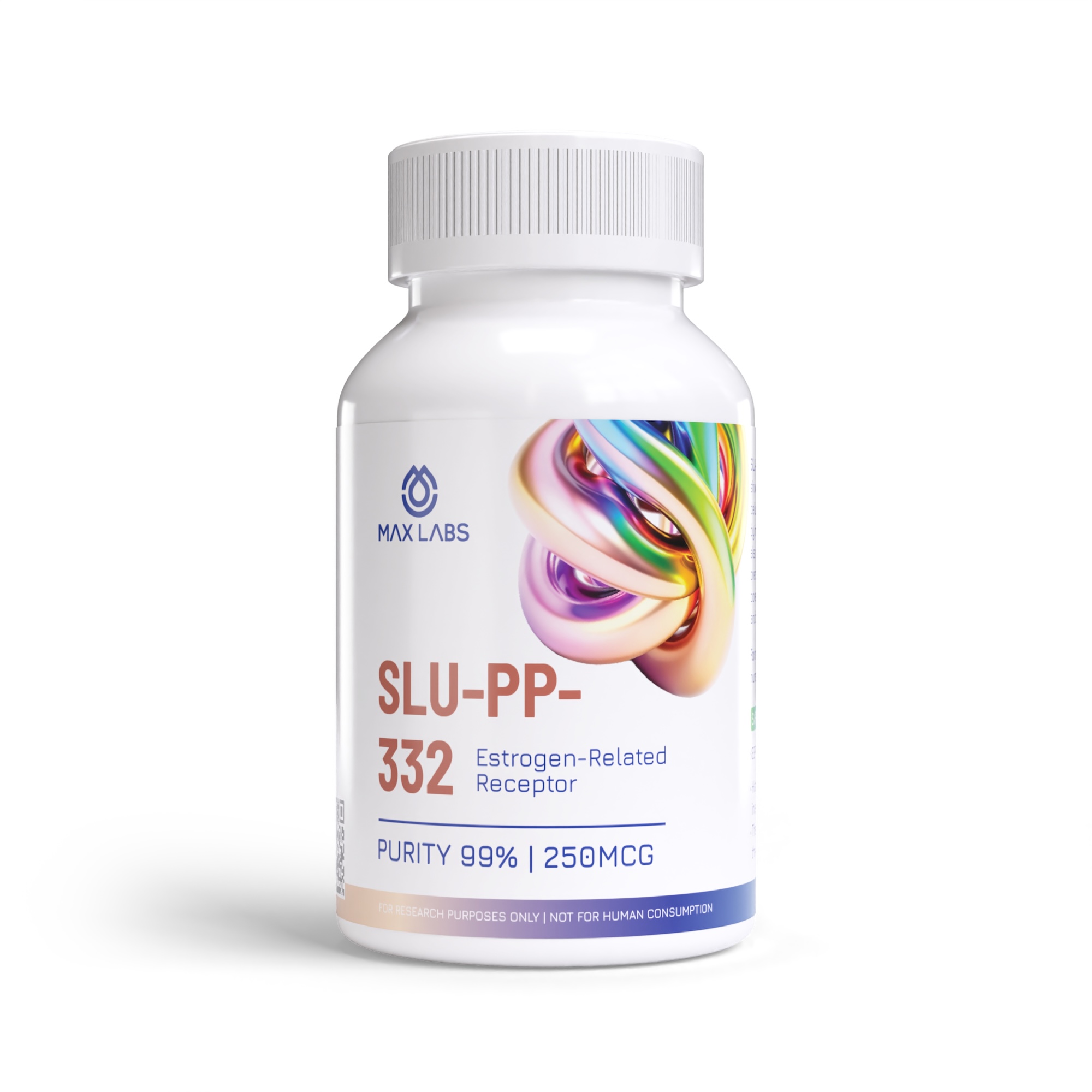
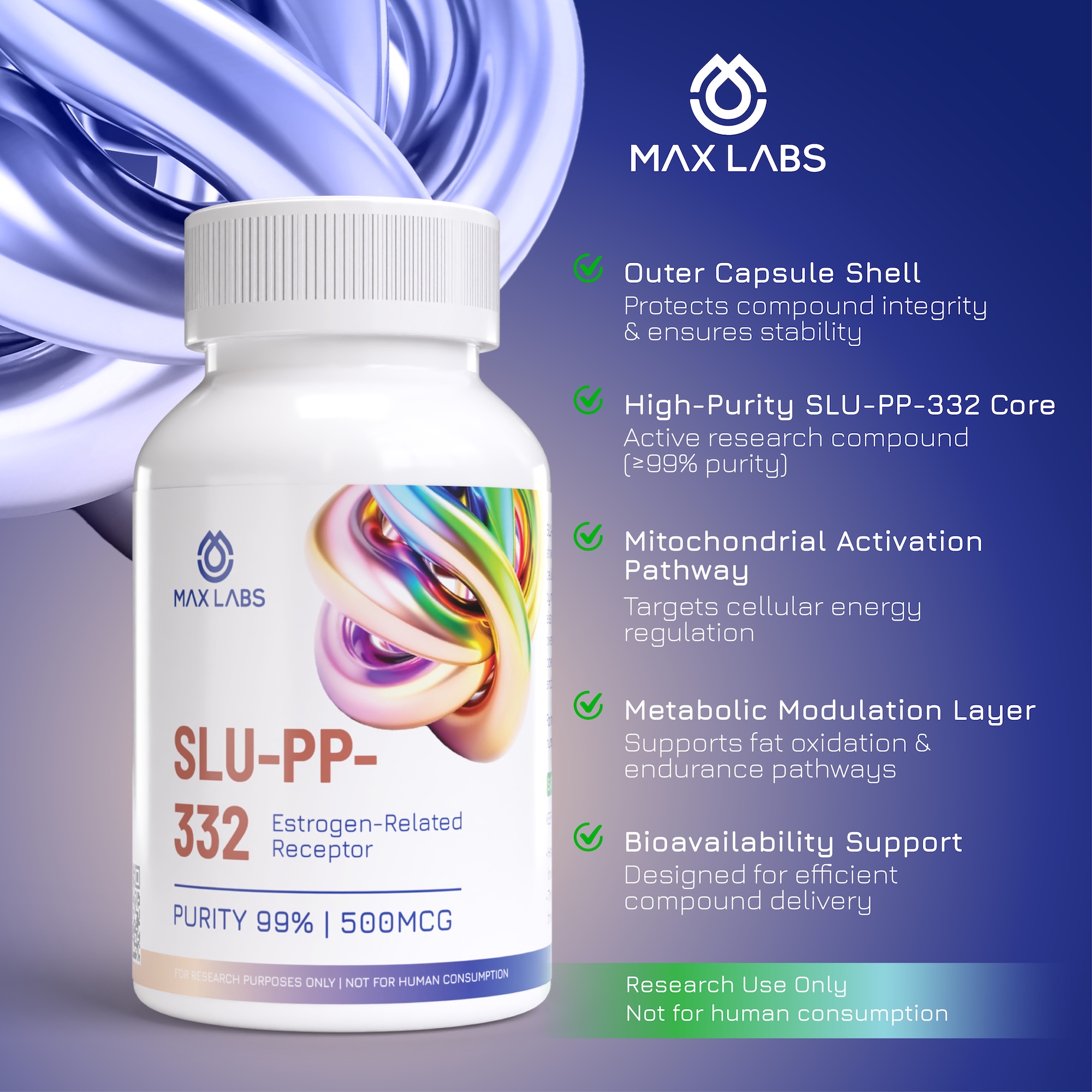
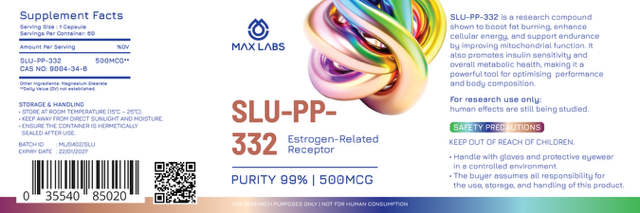
SLU-PP-332 is a small synthetic molecule that acts as an agonist of oestrogen-related receptors (ERRs) and is known for its exercise mimetic action. The first paper on this compound was published in 2023, so we have limited data on its activity and safety.
Mechanism of Action
SLU-PP-332 activates ERRs, particularly ERRα. This receptor is naturally stimulated by an increase in energy demand, leading to:
- Increased PGC-1α expression: This results in enhanced mitochondrial biogenesis in skeletal muscle and adipose tissue, enabling the production of more ATP, improving metabolism and reducing oxidative stress [1].
- Upregulation of DDIT4: The expression of this gene normally increases following exercise. It plays an important role in adaptation to exercise and mitochondrial respiration in skeletal muscle and helps the body respond to stress. It is suppressed in obese animals with symptoms of metabolic syndrome [2].
- Downregulation of NOX4: NOX4, an enzyme that generates reactive oxygen species, is downregulated in response to SLU-PP-332 treatment, which helps to reduce oxidative stress [3].
- Upregulation of Sirtuin 1 (SIRT1): SIRT1 regulates energy balance, inflammation, and cell survival. Its expression is normally increased in response to exercise and can stimulate muscle repair and hypertrophy [3, 4].
- Increased lipolysis: ERRα activation could increase lipolysis by upregulating enzymes that break down triglycerides in adipocytes [5].
Therapeutic Potential
Through these mechanisms, SLU-PP-332 has been found to exert multiple benefits, including:
- Reduction in body weight and insulin resistance: In mice with diet-induced obesity, energy expenditure and fatty acid oxidation were increased. Mice lost approximately 12% of their body weight over the 28 days of treatment, and insulin sensitivity was improved. It also reduced hepatic steatosis and triglycerides [6].
- Enhancement of endurance: In mice, it activated ERRα, increased type IIa skeletal muscle fibres and enhanced exercise endurance [2].
- Reduction in markers of oxidative stress: Ageing and inactivity are linked to higher levels of oxidative stress. Treatment with SLU-PP-332 was found to reduce markers of oxidative stress in inactive women [3].
Reduction in muscle atrophy: It helped to improve metabolism and preserve muscle function in patients suffering from age-related muscle atrophy [3]. - Improvement in heart failure: It improved heart function, reduced fibrosis, and increased the chances of survival in models of heart failure [7]. SLU-PP-332 appears to offer some of the benefits of exercise, making it valuable in reducing muscle loss in patients with reduced mobility. Additionally, the metabolic benefits it offers could help treat diseases such as obesity and type 2 diabetes.
Safety
There is limited data available on the safety of this compound due to the lack of clinical studies. It is currently unapproved for human use. Preclinical tests suggest that this drug may carry the following risks:
- Increased risk of cardiac hypertrophy: Although SLU-PP-332 has a strong affinity for ERRα, it also activates ERRβ/γ. Studies in preclinical models have indicated that ERRβ/γ activation may lead to an increased risk of cardiac hypertrophy [8].
- Dysregulated lipid metabolism: When administered for 12 weeks, glycogen reserves in muscle tissues were depleted. This suggests that long-term use may affect how the body stores and uses energy [6].
How It Compares to MOTS-c
MOTS-c is an endogenous mitochondrial peptide that works via mitochondrial AMPK signalling. It is known for its broad role in metabolism and stress response. SLU-PP-332 is a small synthetic molecule developed as an ERRα agonist, which, like MOTS-c, affects metabolism and energy expenditure. Both SLU-PP-332 and MOTS-c are known to provide exercise mimetic effects and have been investigated for their potential to treat similar diseases:
- Obesity: ERRα agonism reduces weight, while MOTS-c reduces weight gain. Both increase energy expenditure in animal models.
- Insulin sensitivity: Both of these compounds have been found to improve insulin sensitivity.
- Exercise mimetic and enhancing activity: Both increase exercise performance and confer some of the health benefits that physical exercise normally provides.
Most of what we know about these compounds comes from in vitro and animal studies. There is very little human data on each of them; as such, we know very little about their side effects and safety. Their most distinctive difference is in their mechanism of action.
Data Sheet
- Application: Research on metabolism, obesity, and ageing
- Pack Sizes: 500 µg capsules x 100
- CAS Number: 303760-60-3
- Molecular Weight (g/mol): 290.3
- Chemical Formula: C₁₈H₁₄N₂O₂
- Synonyms: 4-hydroxybenzoic acid, 2-(2-naphthalenylmethylene)hydrazide
- Storage: Keep refrigerated at 2-8°C until use. For long-term storage, keep at -20°C.
- Organoleptic Profile: White to off-white
- Physical Form: Solid
Conclusion
ERRα is known to regulate energy expenditure, mitochondrial biogenesis, and lipid metabolism. It is normally activated in response to an increase in energy demand, such as exercise. SLU-PP-332 acts as an ERRα agonist, stimulating the activation of this receptor even if there is no increase in demand for energy.
Research has found that it may offer metabolic benefits that could help treat obesity and type 2 diabetes, as well as counteract muscle degradation and improve exercise endurance. This could particularly benefit patients who are physically limited and have metabolic disorders. The drug is currently unapproved for human use, as we lack data on clinical safety and efficacy.
References
- Fan W, Oh TG, Wang HJ, et al. Estrogen-related receptors regulate innate and adaptive muscle mitochondrial energetics through cooperative and distinct actions. Proc Natl Acad Sci U S A. 2025;122(20):e2426179122. doi:10.1073/pnas.2426179122
- Billon C, Sitaula S, Banerjee S, et al. Synthetic ERRα/β/γ Agonist Induces an ERRα-Dependent Acute Aerobic Exercise Response and Enhances Exercise Capacity. ACS Chem Biol. 2023;18(4):756-771. doi:10.1021/acschembio.2c00720
- Bonanni R, Falvino A, Matticari A, et al. Targeting ERRs to counteract age-related muscle atrophy associated with physical inactivity: a pilot study. Front Physiol. 2025;16:1616693. doi:10.3389/fphys.2025.1616693
- Radak Z, Suzuki K, Posa A, Petrovszky Z, Koltai E, Boldogh I. The systemic role of SIRT1 in exercise mediated adaptation. Redox Biol. 2020;35:101467. doi:10.1016/j.redox.2020.101467
- Ju D, He J jing, Zheng X li, Zhao L, Yang G. [Role of estrogen-related receptor alpha in adipocyes lipolysis]. Sheng Wu Gong Cheng Xue Bao Chin J Biotechnol. 2011;27 1:18-25.
- Billon C, Schoepke E, Avdagic A, et al. A Synthetic ERR Agonist Alleviates Metabolic Syndrome. J Pharmacol Exp Ther. 2024;388(2):232-240. doi:10.1124/jpet.123.001733
- Xu W, Billon C, Li H, et al. Novel pan-ERR agonists ameliorate heart failure through enhancing cardiac fatty acid metabolism and mitochondrial function. Circulation. 2024;149(3):227-250. doi:10.1161/CIRCULATIONAHA.123.066542
- Kwon DH, Eom GH, Kee HJ, et al. Estrogen-related receptor gamma induces cardiac hypertrophy by activating GATA4. J Mol Cell Cardiol. 2013;65:88-97. doi:10.1016/j.yjmcc.2013.09.011
Reviews
There are no reviews yet.