Growth hormone (GH) and IGF-1 (Insulin-Like Growth Factor 1) are both part of the growth-promoting GH/IGF-1 axis. In medicine, they are used for treating different conditions despite the similarities in their biological effects. These hormones also have unique activities that are independent and antagonistic to each other. This article will go over what each of these hormones is, how they affect each other, the therapeutic value of each and what happens when they are combined.
By first looking at the HGH/IGF-1 axis, we can better understand why these hormones are so closely linked and why many of the claims made about each of these hormones have some overlap.
The HGH/IGF-1 Axis
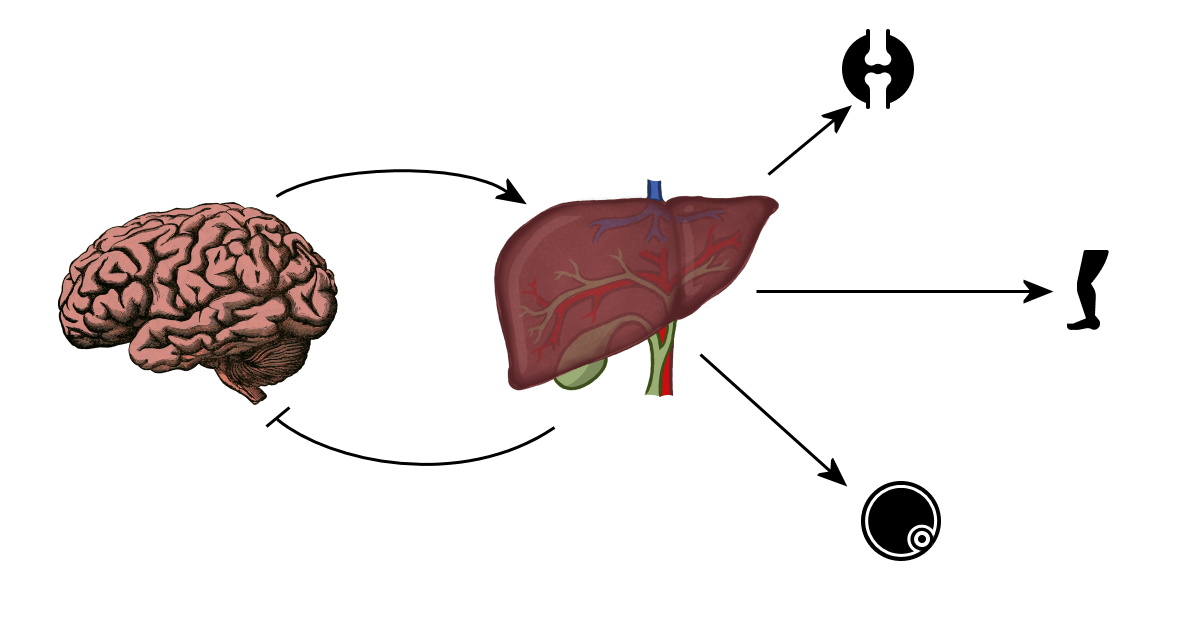
The release of these hormones begins with the release of GHRH from the hypothalamus. GHRH binds to GHRH receptors in the pituitary, which stimulates the release of GH from this gland.
GH binds to GH-binding protein (GHBP), which transports GH to GH receptors (GHR) in the liver, increases its half life in circulation and modulates GH action.
The binding of GH to GHR then stimulates the release of IGF-1, which binds to IGF binding proteins (IGFBPs) that are responsible for stabilising, transporting and modulating the activity of IGF-1. IGF-1 is then able to bind to IGF-1 receptors, which are found throughout the body, where it may promote cell survival, tissue growth or alter metabolism.
IGF-1 inhibits the secretion of GH, helping to regulate levels. Insulin also plays an important role in this axis by inhibiting IGF-1. This will affect GH secretion and by affecting the liver’s sensitivity to GH.1
This description of the GH/IGF-1 axis does not cover all the nuances of their interactions, as not all of GH’s activity is due to the effects of IGF-1 and IGF-1 is not only stimulated by GH.
What is HGH?
Typically referred to simply as growth hormone, the terms HGH (hGH) or rhGH are often used when talking about growth hormones from multiple different species so that the reader can differentiate between them or, in the case of rhGH, to also indicate that it was manufactured with the use of recombinant bacteria. Growth hormone, whether from the pituitary gland or expressed by bacteria, has the same amino acid sequence and thus the same mechanism of action.
HGH is a 191 amino acid long hormone that promotes growth, cellular regeneration and alters metabolism. GHRH (Growth Hormone Releasing Hormone) and ghrelin are the main hormones that stimulate the release of GH from the pituitary gland, while insulin, somatostatin and IGF-1 block GH release. GH release can be stimulated in response to:
- Sleep: GHRH is released in pulses as we sleep.3
- Exercise: The metabolic and physical stress caused by exercise triggers the release of GHRH.4
- Fasting: When fasting, insulin levels are lower and no longer block GH release.5 Combined with the release of ghrelin, this increases GH levels.6 This increase in GH does not elicit an increase in IGF-1.
- Nutrient intake: Protein is the nutrient that most strongly stimulates GH production and release.7
- Low body fat: Low body fat leads to lowered insulin and free fatty acid levels, which stimulate GH release.8
What Does HGH Do?
Once GH is released, it:
- Promotes an increase in height in children. It can also bind directly to receptors on precursor cartilage cells in the growth plates of long bones, promoting bone growth independently of IGF-1.2
- Increases protein synthesis and the growth of muscles, bones and organs.
- Stimulates the breakdown of fat for fuel. This increases FFA levels and blocks the signal of insulin in the liver and muscles, which can contribute to the development of insulin resistance.
- Stimulates the release of IGF-1, which has insulin-like activity.9
When the release of GH is stimulated under conditions of caloric deprivation, the liver becomes resistant to GH, so GH does not stimulate IGF-1 release but can continue to promote the burning of fat.18
What Conditions is HGH Used to Treat?
Recombinant HGH is approved for the treatment of GHD (Growth Hormone Deficiency) and several other conditions where growth is stunted, however, researchers are still investigating new therapeutic uses for this hormone.
HGH levels tend to decrease as we age, suggesting that supplementation may counteract certain aspects of ageing. Studies have found that it can shift body composition towards healthier body fat and lean mass percentages, increase skin thickness and improve sleep, although there is a lack of robust scientific evidence to support its approval for such uses.10
Since HGH can alter body composition, it has been tested in clinical trials as a treatment for obesity, with mixed results. A meta analysis found that low doses could reduce visceral fat and increase thigh muscle area,11 but despite producing a beneficial shift in body composition, it does not always lead to a reduction in body weight.12
What is IGF-1?
IGF-1 is a 70 amino acid long protein hormone produced mainly by the liver. Many of the effects attributed to GH are due to the downstream activity of IGF-1, as such, it is also associated with growth, repair and metabolism.
The release of IGF-1 can be stimulated by:
- Hormones: Growth hormone stimulates IGF-1 release. Insulin increases the sensitivity of the liver to GH and thus facilitates the release of IGF-1.13 Thyroid hormones,14 androgens,15 and oestrogen also stimulate IGF-1 secretion.16
- Exercise: As mentioned earlier, GH is released in response to exercise. This then stimulates IGF-1 release. Additionally, intense physical activity can stimulate local IGF-1 production in muscles.17
Sleep and protein intake also stimulate the release of IGF-1 as a result of increased GH.
Since GH increases IGF-1 levels, except in cases of caloric deficit, there is much overlap in these stimuli, but IGF-1 can be released independently of GH stimulation.
What Does IGF-1 Do?
IGF-1 promotes longitudinal bone, organ and muscle growth, as well as protein synthesis. Although many of the activities of growth hormone are due to the downstream effects of IGF-1, these two hormones have notable differences:
- While HGH increases insulin insensitivity, IGF-1 mimics insulin’s activity and enhances insulin sensitivity.19
- HGH increases blood sugar levels, while IGF-1 lowers them.
- HGH can promote lipolysis, but IGF-1 facilitates the transport of glucose into cells where it is stored as fat.20
In addition to this, IGF-1 exerts biological effects independently of GH, some of which are similar to GH’s activity.21
What Conditions is IGF-1 Used to Treat?
Children who have severe primary IGF-1 deficiency (PIGFD) have abnormally low IGF-1 levels, but normal or elevated growth hormone levels which their body does not respond to. These patients can be treated with IGF-1 to help normalise growth.22 It is also used to treat patients with GH gene deletion or who have developed antibodies to GH.23
HGH and IGF-1 in the Treatment of Diseases
Although both HGH and IGF-1 have growth-promoting activities that could be used to normalise growth, they are not used interchangeably. So, although they are both used to treat conditions with similar phenotypes, the underlying cause of the condition determines which is most appropriate to use.
A limited number of studies have looked at the effect of HGH and IGF-1 when combined. One study used animal models of Duchenne muscular dystrophy (DMD) that were treated with GH and IGF-1. Researchers found that the treatment promoted growth in the stunted animals and improved their grip strength by 16.9%, while bone health was unaffected.24 Another study looking at recovery from physical trauma caused by surgery found that the treatment helped to maintain protein synthesis, but GH treatment alone was better at preserving muscle.25
The doses of each of these hormones that are used in treatment must be chosen with careful consideration, as IGF-1 can inhibit GH. As such, IGF-1 treatment may inhibit endogenous GH production, limiting the growth-promoting activities that GH can exert directly on tissues.
Risks of HGH and IGF-1 Treatment
Since HGH and IGF-1 have been used for the treatment of several medical conditions, we understand the risks that come with treatments that include them.
Some of the risks involved with both treatments include:
- Oedema: GH and IGF-1 promote fluid retention by exerting an antidiuretic effect on the kidneys. In addition to regulating blood glucose levels, insulin also plays an important role in electrolyte balance. The higher levels of insulin, which are produced as tissues become less responsive to it, may signal to the kidneys to retain sodium. This increased sodium concentration results in more water being drawn into tissues, leading to swelling and bloating.26 The insulin-like action of IGF-1 means that it can also affect electrolyte balance, causing the kidneys to retain sodium and swell with fluid.
- Joint, muscle and nerve pain: The swelling from fluid retention can lead to joints becoming stiff and achy as water collects inside and around them. This swelling can also compress nerves and tissues, causing pain.
- Acromegaly: When high doses are used, this can lead to the thickening of bones, alter facial features and cause organs to grow larger.28 Enlargement of the heart can lead to cardiovascular problems.29
- Cancer: Patients who survived cancer in childhood had a small increase in risk of a de novo cancer and secondary malignant neoplasm developing.30 Higher circulating levels of IGF-1 are linked to a higher risk of thyroid, colorectal, breast and prostate cancer, but a decreased risk of ovarian and liver cancer.20,32
- Gynecomastia: Men may develop tender breast tissue.27
- Insulin resistance: Since IGF-1 binds to insulin receptors, activating them, long term elevated IGF-1 levels can lead to tissues becoming less sensitive to both insulin and IGF-1.19 GH makes tissues more resistant to insulin, elevating blood sugar levels and possibly leading to the development of type 2 diabetes.
IGF-1 treatment can cause hypoglycaemia because of its similar action to insulin.31
When these two hormones are used in combination at carefully controlled doses, the risks involved with treatment are similar to those of monotherapy.
Conclusion
HGH and IGF-1 are both hormones that promote growth, cell regeneration and alter metabolism. Despite the similarities in their biological effects, they exert independent effects on tissues, which makes both essential for the correct functioning of the body. They are useful for the treatment of growth-related conditions, and which one to use is decided by the cause of the condition. Because of their similar actions on tissues and the fact that GH normally stimulates IGF-1 release, the risks of administering each of these hormones bear many similarities, with the most severe adverse events being experienced by those with a history of cancer or who take the hormones for prolonged periods. Under the careful monitoring of a medical professional, these risks can be minimised.
References
- Nijenhuis-Noort EC, Berk KA, Neggers SJCMM, van der Lely AJ. The Fascinating Interplay between Growth Hormone, Insulin-Like Growth Factor-1, and Insulin. Endocrinol Metab. 2024;39(1):83-89. doi:10.3803/EnM.2024.101
- Ohlsson C, Bengtsson BA, Isaksson OG, Andreassen TT, Slootweg MC. Growth hormone and bone. Endocr Rev. 1998;19(1):55-79. doi:10.1210/edrv.19.1.0324
- Ding X, Hwang FJ, Silverman D, et al. Neuroendocrine circuit for sleep-dependent growth hormone release. Cell. 2025;188(18):4968-4979.e12. doi:10.1016/j.cell.2025.05.039
- Jenkins PJ. Growth hormone and exercise. Clin Endocrinol (Oxf). 1999;50(6):683-689. doi:10.1046/j.1365-2265.1999.00784.x
- de Sousa LMM, Vicente VAN, Donato J Jr. Negative Feedback Loops and Hormonal Factors that Regulate GH Secretion. Endocrinology. 2025;166(10):bqaf139. doi:10.1210/endocr/bqaf139
- Goldstein JL, Zhao T j, Li RL, Sherbet DP, Liang G, Brown MS. Surviving Starvation: Essential Role of the Ghrelin-Growth Hormone Axis. Cold Spring Harb Symp Quant Biol. 2011;76:121-127. doi:10.1101/sqb.2011.76.010447
- Gannon MC, Nuttall FQ. Effect of a high-protein diet on ghrelin, growth hormone, and insulin-like growth factor-I and binding proteins 1 and 3 in subjects with type 2 diabetes mellitus. Metabolism. 2011;60(9):1300-1311. doi:10.1016/j.metabol.2011.01.016
- Stanley TL, Grinspoon SK. Effects of growth hormone–releasing hormone on visceral fat, metabolic, and cardiovascular indices in human studies. Growth Horm IGF Res. 2015;25(2):59-65. doi:10.1016/j.ghir.2014.12.005
- Olarescu NC, Gunawardane K, Hanson TK, Møller N, Jørgensen JOL. Normal Physiology of Growth Hormone in Normal Adults. In: Feingold KR, Adler RA, Ahmed SF, et al., eds. Endotext. MDText.com, Inc.; 2000. Accessed August 31, 2026. http://www.ncbi.nlm.nih.gov/books/NBK279056/
- Fernández-Garza LE, Guillen-Silva F, Sotelo-Ibarra MA, Domínguez-Mendoza AE, Barrera-Barrera SA, Barrera-Saldaña HA. Growth hormone and aging: a clinical review. Front Aging. 2025;6:1549453. doi:10.3389/fragi.2025.1549453
- Sun F, Yang A, Jin Y, et al. Effects of low-dose growth hormone treatment on obesity: a meta-analysis of randomized controlled trials. Postgrad Med. 2025;137(7):665-675. doi:10.1080/00325481.2025.2570106
- Mekala KC, Tritos NA. Effects of Recombinant Human Growth Hormone Therapy in Obesity in Adults: A Metaanalysis. J Clin Endocrinol Metab. 2009;94(1):130-137. doi:10.1210/jc.2008-1357
- Leung KC, Doyle N, Ballesteros M, Waters MJ, Ho KK. Insulin regulation of human hepatic growth hormone receptors: divergent effects on biosynthesis and surface translocation. J Clin Endocrinol Metab. 2000;85(12):4712-4720. doi:10.1210/jcem.85.12.7017
- Leung AM, Brent GA. The Influence of Thyroid Hormone on Growth Hormone Secretion and Action. In: Cohen LE, ed. Growth Hormone Deficiency: Physiology and Clinical Management. Springer International Publishing; 2016:29-46. doi:10.1007/978-3-319-28038-7_4
- Meinhardt UJ, Ho KKY. Modulation of growth hormone action by sex steroids. Clin Endocrinol (Oxf). 2006;65(4):413-422. doi:10.1111/j.1365-2265.2006.02676.x
- Ho KKY, O’Sullivan AJ. Effect of Estrogen on GH Secretion and Action in Postmenopausal Women. In: Veldhuis JD, Giustina A, eds. Sex-Steroid Interactions with Growth Hormone. Springer; 1999:54-66. doi:10.1007/978-1-4612-1546-2_6
- Velloso CP. Regulation of muscle mass by growth hormone and IGF‐I. Br J Pharmacol. 2008;154(3):557-568. doi:10.1038/bjp.2008.153
- Inagaki T, Lin VY, Goetz R, Mohammadi M, Mangelsdorf DJ, Kliewer SA. Inhibition of Growth Hormone Signaling by the Fasting-Induced Hormone FGF21. Cell Metab. 2008;8(1):77-83. doi:10.1016/j.cmet.2008.05.006
- Friedrich N, Thuesen B, Jørgensen T, et al. The Association Between IGF-I and Insulin Resistance. Diabetes Care. 2012;35(4):768-773. doi:10.2337/dc11-1833
- AsghariHanjani N, Vafa M. The role of IGF-1 in obesity, cardiovascular disease, and cancer. Med J Islam Repub Iran. 2019;33:56. doi:10.34171/mjiri.33.56
- Laron Z. Insulin-like growth factor 1 (IGF-1): a growth hormone. Mol Pathol. 2001;54(5):311-316. doi:10.1136/mp.54.5.311
- Cohen J, Blethen S, Kuntze J, Smith SL, Lomax KG, Mathew PM. Managing the Child with Severe Primary Insulin-Like Growth Factor-1 Deficiency (IGFD): IGFD Diagnosis and Management. Drugs RD. 2014;14(1):25-29. doi:10.1007/s40268-014-0039-7
- Kemp SF. Insulin-like growth factor-I deficiency in children with growth hormone insensitivity: current and future treatment options. BioDrugs Clin Immunother Biopharm Gene Ther. 2009;23(3):155-163. doi:10.2165/00063030-200923030-00002
- Wood CL, van ‘t Hof R, Dillon S, et al. Combined growth hormone and insulin-like growth factor-1 rescues growth retardation in glucocorticoid-treated mdxmice but does not prevent osteopenia. J Endocrinol. 2022;253(2):63-74. doi:10.1530/JOE-21-0388
- Hammarqvist F, Wennström I, Wernerman J. Effects of Growth Hormone and Insulin-Like Growth Factor-1 on Postoperative Muscle and Substrate Metabolism. J Nutr Metab. 2010;2010:1-9. doi:10.1155/2010/647929
- Møller J, Nielsen S, Hansen TK. Growth hormone and fluid retention. Horm Res. 1999;51 Suppl 3:116-120. doi:10.1159/000053173
- Cohn L, Feller AG, Draper MW, Rudman IW, Rudman D. Carpal tunnel syndrome and gynaecomastia during growth hormone treatment of elderly men with low circulating IGF-I concentrations. Clin Endocrinol (Oxf). 1993;39(4):417-425. doi:10.1111/j.1365-2265.1993.tb02388.x
- Dhaneshwar S, Shandily S, Tiwari V. Growth Hormone Excess: Implications and Management. Endocr Metab Immune Disord Drug Targets. 2023;23(6):748-763. doi:10.2174/1871530322666221012155533
- Rivera FB, Taliño MK, Ansay MF, et al. Cardiovascular Effects of Excess Growth Hormone: How Real is the Threat? Rev Cardiovasc Med. 2023;24(4):95. doi:10.31083/j.rcm2404095
- Chae HW, Kim DH, Kim HS. Growth hormone treatment and risk of malignancy. Korean J Pediatr. 2015;58(2):41-46. doi:10.3345/kjp.2015.58.2.41
- Denaite D, Navardauskaite R. Clinical characteristics and treatment efficacy in patients with primary severe IGF-1 deficiency treated with recombinant IGF-1. Front Pediatr. 2024;12:1461163. doi:10.3389/fped.2024.1461163
- Knuppel A, Fensom GK, Watts EL, et al. Circulating Insulin-like Growth Factor-I Concentrations and Risk of 30 Cancers: Prospective Analyses in UK Biobank. Cancer Res. 2020;80(18):4014-4021. doi:10.1158/0008-5472.CAN-20-1281